
Top Careers After an MBA in Entrepreneurship
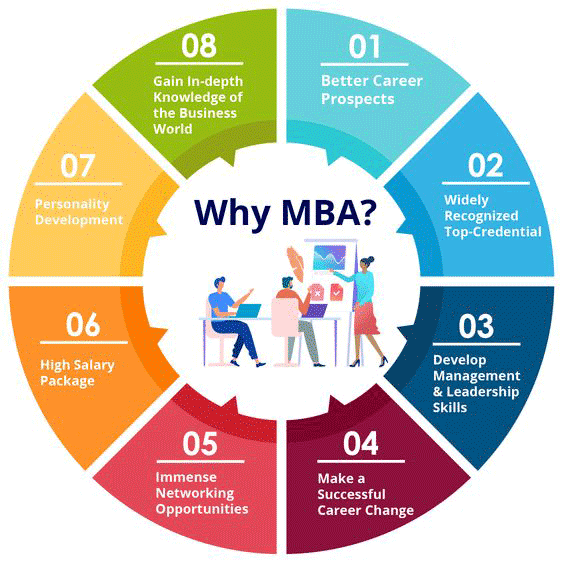
An MBA in Entrepreneurship is often associated with one obvious outcome: launching a startup. While that is certainly one of the most exciting paths, it is far from the only one. In reality, this degree can open the door to a wide range of careers across startups, venture capital, consulting, product management, growth, business development, operations, corporate innovation, and even executive leadership. That broader career flexibility is one of the biggest reasons this MBA remains attractive. It prepares graduates not only to build companies, but also to identify opportunities, evaluate risk, allocate resources, lead teams, and scale ideas in uncertain environments.
That matters because the entrepreneurial economy is still highly active. In the United States, the Census Bureau reported 496,443 business applications in February 2026, with 28,994 projected business formations within four quarters from that monthly cohort. The Census Bureau’s Business Formation Statistics are specifically designed to track timely trends in new business applications and formations, which makes them one of the clearest indicators that entrepreneurial activity remains substantial.
Global entrepreneurship data also points in the same direction, although with a more nuanced picture. The GEM 2025/2026 Global Report says entrepreneurial activity remains strong worldwide, while the GEM 2024/2025 Global Report highlights a rise in fear of failure, with 49% of respondents in 2024 saying they would not start a business because of it, up from 44% in 2019. That combination is important: opportunity remains strong, but the environment rewards people who know how to navigate uncertainty, validate ideas, build resilient models, and execute with discipline. Those are exactly the kinds of capabilities an MBA in Entrepreneurship is supposed to strengthen.
This is why the degree should not be viewed as a “startup-only” qualification. It is better understood as a career accelerator for people who want to build, grow, advise, or fund new ventures and high-growth business models. In the sections below, we will break down the top career paths after an MBA in Entrepreneurship, what each role involves, who it suits best, and why employer demand continues to support these profiles.
What Does an MBA in Entrepreneurship Actually Prepare You For?
An MBA in Entrepreneurship usually blends classic MBA foundations such as finance, strategy, marketing, operations, and leadership with more venture-oriented topics like startup finance, innovation management, lean validation, business model design, growth strategy, fundraising, product-market fit, and scaling.
This combination matters because entrepreneurship in the real world is not just creativity. It is structured problem-solving under uncertainty. It requires market insight, financial judgment, experimentation, execution, negotiation, and resilience. In other words, an entrepreneurship MBA is typically designed to produce graduates who can do four things well:
identify opportunities
test and refine business ideas
mobilize people and resources
grow organizations in ambiguous conditions
That skill set is valuable far beyond startup founding. In fact, many of the strongest post-MBA careers in this area sit at the intersection of innovation and execution, not just company formation.
Why the Degree Has Broader Career Value Than Many People Assume
A common misconception is that an MBA in Entrepreneurship is somehow narrower or less employable than an MBA in Finance, Analytics, or Operations. In practice, it often builds a very transferable profile. Entrepreneurial graduates are trained to work in environments where there is incomplete information, high pressure, evolving customer needs, and constant trade-offs. That makes them useful in startups, growth-stage firms, innovation teams inside large companies, and consulting environments where ambiguity is normal.
Broader labor-market data also supports the relevance of these adjacent career paths. The U.S. Bureau of Labor Statistics projects 9% growth for management analysts from 2024 to 2034, with about 98,100 openings per year, and reports a median annual wage of $101,190 in May 2024. It also projects 7% growth for project management specialists and a median annual wage of $100,750 in May 2024. These are not “entrepreneurship” job titles, but they map closely to the kinds of strategic, operational, and scaling work many entrepreneurship MBA graduates do.
Meanwhile, management occupations as a broader category had a median annual wage of $122,090 in May 2024, compared with $49,500 for all occupations, which reinforces a key point: careers involving leadership, business decision-making, and operational responsibility continue to command strong value in the labor market.
Top Careers After an MBA in Entrepreneurship
The best way to think about these careers is not by title alone, but by career logic. After this MBA, graduates usually move into one of four broad directions:
build a venture
join a startup or scale-up
advise growing businesses
invest in or support the startup ecosystem
Each route includes several distinct career options.
1. Startup Founder
This is the most obvious path, and for many students, the most compelling reason to pursue the degree in the first place. Startup founders create a new business around a product, service, platform, or business model. They identify a market gap, validate demand, build an offering, secure resources, and try to reach sustainable growth.
An MBA in Entrepreneurship can help here because it gives founders a structured toolkit. Instead of relying only on instinct, graduates can approach entrepreneurship with stronger knowledge of market analysis, pricing, fundraising, financial planning, customer acquisition, operations, and strategic decision-making. They may also gain access to incubators, mentors, alumni networks, pitch competitions, and investor exposure through the MBA ecosystem.
This path is best for people who have a high tolerance for uncertainty and want direct ownership over building something new. It is also the least linear route. Some graduates launch immediately after the MBA, while others spend a few years in startups, consulting, or product roles before founding their own company.
From a market perspective, the volume of business applications in the U.S. suggests that startup formation remains a meaningful economic force, even if not every application becomes a durable employer firm.
2. Co-Founder or Early-Stage Startup Operator
Not every entrepreneurship MBA graduate wants to be the original founder. Some prefer joining an early-stage startup as a co-founder, chief of staff, business lead, head of growth, or early operations hire. This can be an excellent middle ground: you still work in a fast-moving entrepreneurial environment, but you do not necessarily carry all the original founder risk alone.
These roles can involve:
market entry
customer discovery
go-to-market execution
hiring and team building
fundraising support
partnerships
operational setup
early KPI design
For many graduates, this is one of the smartest post-MBA moves because it provides real startup experience while still leaving room to launch their own venture later. It also lets them specialize. One graduate may become the commercial engine of a startup. Another may focus on finance and fundraising. Another may build internal systems and operations.
This is especially attractive in sectors where venture funding is active. According to the PitchBook-NVCA Venture Monitor, U.S. venture activity in Q3 2025 reached an estimated $80.9 billion across 4,208 deals, while the Q4 2025 Venture Monitor noted continued strong capital access for high-performing AI companies. That does not mean fundraising is easy for everyone, but it does indicate that well-positioned startups continue to attract capital, especially in sectors with strong investor conviction.
3. Venture Capital Associate or Analyst
One of the most sought-after paths after an entrepreneurship-focused MBA is venture capital. VC firms invest in startups and growth companies, which means they need people who understand how new ventures work, how markets evolve, what good founders look like, and how scalable business models are built.
An MBA in Entrepreneurship can be valuable in venture because it develops the commercial judgment needed to assess companies at early or growth stages. Graduates in VC-related roles may spend time:
sourcing startups
evaluating pitch decks
analyzing markets and competitors
meeting founders
performing due diligence
supporting portfolio companies
tracking industry trends
This path suits people who love startups but prefer evaluating and supporting multiple ventures rather than running a single company themselves. It is also highly competitive. Many firms prefer candidates with prior startup, consulting, finance, product, or operator experience in addition to the MBA.
The continued flow of venture capital into selective areas like AI and high-growth technology supports the relevance of this path, though it also means the market is concentrated and discerning.
4. Product Manager
Product management is one of the best career fits for entrepreneurship MBA graduates, especially those interested in building solutions rather than just managing spreadsheets or financial models. Product managers sit at the intersection of customer needs, business goals, engineering constraints, and market opportunity. They help define what gets built, why it matters, and how it should evolve.
This role overlaps naturally with entrepreneurial thinking because good product managers do many of the same things founders do:
identify problems worth solving
prioritize limited resources
validate user needs
coordinate cross-functional teams
translate insights into decisions
balance vision with execution
For graduates who like innovation but want a more structured corporate or scale-up environment, product management can be an ideal destination. It is especially strong in tech, SaaS, digital platforms, fintech, healthcare innovation, and consumer apps.
5. Growth Manager or Head of Growth
Many startups and digital businesses live or die based on customer acquisition, retention, monetization, and scalable growth systems. That makes growth roles highly relevant for entrepreneurship graduates who enjoy experimentation, metrics, and commercial strategy.
A growth manager may work on:
acquisition channels
funnel optimization
pricing experiments
retention strategy
partnerships
lifecycle campaigns
growth loops and referral systems
This role is especially suitable for candidates who like the energy of startups but are more commercially and analytically oriented than product- or operations-focused. It also offers a direct line to leadership because strong growth performance is easy for companies to recognize.
6. Business Development Manager
Business development is another strong path because entrepreneurship MBA graduates are often trained to spot opportunity, build partnerships, and think beyond established routines. Business development roles may involve strategic alliances, revenue partnerships, channel expansion, B2B sales development, market entry, and ecosystem building.
This career is a good match for people who are persuasive, externally oriented, and comfortable navigating uncertainty. It often appears in startups, scale-ups, tech platforms, international expansion teams, and innovation-led firms.
It is also one of the more flexible career paths after the degree because it can lead into general management, partnerships leadership, commercial strategy, or even founder-level roles later.
7. Startup Consultant or Management Consultant
Consulting is a highly relevant path after an MBA in Entrepreneurship, especially for graduates who want exposure to multiple companies, industries, and growth problems. Some go into classic management consulting. Others work in boutique advisory firms focused on startups, innovation, scaling, digital transformation, or go-to-market strategy.
This route can be especially strong because management analysts remain in a healthy labor-market category. As noted earlier, BLS projects 9% employment growth from 2024 to 2034 for management analysts, with a median annual wage of $101,190 and 98,100 openings per year on average.
For entrepreneurship MBA graduates, consulting can provide:
accelerated problem-solving experience
exposure to different business models
structured strategic training
client-facing credibility
a bridge into private equity, VC, startups, or innovation roles later
This is an excellent fit for people who like variety, analysis, and business building, but who are not yet ready to commit to a single venture.
8. Project Manager or Program Manager in High-Growth Companies
Entrepreneurship is often romanticized as vision and innovation, but much of successful growth is operational discipline. That is why project and program management roles can be excellent post-MBA options, especially in startups and scale-ups that need stronger execution systems.
Project management specialists had a median annual wage of $100,750 in May 2024, according to BLS, and the occupation is projected to grow 7% from 2024 to 2034.
In practice, this type of role can include:
launching new products or markets
coordinating growth initiatives
managing cross-functional rollout plans
setting milestones and accountability structures
reducing operational chaos in scaling businesses
This path is often underestimated, but it can be one of the most effective ways for an entrepreneurship MBA graduate to become indispensable inside a growing organization.
9. Corporate Innovation Manager
Not every entrepreneurial career happens in a startup. Large companies increasingly need people who can think like entrepreneurs inside established structures. Corporate innovation managers work on new ventures, internal incubators, partnerships, digital transformation initiatives, new market exploration, and innovation strategy.
This path is ideal for graduates who like entrepreneurship but also want the resources, brand strength, and compensation stability of larger companies. Their job is often to bring startup-style thinking into corporate environments that need renewal.
Depending on the company, this may involve:
venture studios
internal startup programs
open innovation partnerships
scouting emerging technologies
new product incubation
business model reinvention
This role can be a particularly good fit for candidates who are creative and strategic but prefer lower personal financial risk than startup founding.
10. General Manager or Operations Leader
Entrepreneurship MBAs often end up in operations-heavy roles because startups and scaling companies need leaders who can turn ideas into repeatable systems. General management is one of the most powerful long-term paths after this degree, especially for people who combine commercial instinct with operational discipline.
BLS reports a median annual wage of $102,950 for general and operations managers in May 2024, while chief executives had a median annual wage of $206,420. In addition, BLS recently noted that general and operations managers are projected to have 308,700 openings each year on average from 2024 to 2034, more than any other occupation that typically requires a bachelor’s degree for entry.
This does not mean an MBA graduate will walk directly into a CEO role. But it does underline something important: the broader management track remains very large and highly relevant. Entrepreneurship-trained graduates often do well on this track because they are used to making decisions under pressure, balancing trade-offs, and building teams around action.
11. Franchise Owner or Small Business Acquirer
Another overlooked path is acquiring or operating an existing business rather than launching one from scratch. Some entrepreneurship graduates buy small businesses, join family businesses, acquire franchises, or use search-fund-style models to take over established firms with growth potential.
This route appeals to people who want entrepreneurial control with less early-stage uncertainty. Instead of proving that a market exists, they begin with a company that already has customers, operations, and revenue. Their challenge is then to improve, modernize, and scale it.
In many cases, the MBA helps by providing stronger skills in:
financial analysis
operational improvement
growth strategy
process redesign
leadership transition
capital planning
For some graduates, this is a more financially rational version of entrepreneurship than pure startup founding.
12. Fundraising, Partnerships, or Ecosystem Roles
Some graduates move into roles that support entrepreneurs indirectly, especially in accelerators, incubators, startup hubs, innovation agencies, university venture centers, economic development bodies, and nonprofit entrepreneurship organizations.
These jobs may involve:
founder support
mentorship coordination
partnership building
sponsorship and fundraising
program design
community building
startup ecosystem development
Related management roles in communications and fundraising can also be well compensated. BLS reports median annual wages of $123,480 for fundraising managers and $138,520 for public relations managers in May 2024.
This path suits graduates who care about entrepreneurship as a system, not just as a personal career vehicle.
13. Finance, Strategy, or CFO-Track Roles in Startups
Not every entrepreneurship MBA graduate is a founder or growth leader. Some become the strategic finance mind inside young companies. These roles can include finance manager, FP&A lead, strategic finance associate, or eventually CFO-track positions in startups and scaling businesses.
This can be a great path for graduates who like startups but are particularly strong in:
cash planning
capital raising
investor reporting
pricing economics
scenario modeling
unit economics
strategic resource allocation
The labor market for financial leadership remains strong. BLS projects 15% growth for financial managers from 2024 to 2034, with about 74,600 openings per year, and reports a median annual wage of $161,700 in May 2024. Financial and investment analysts had a median annual wage of $101,350, while financial risk specialists had a median annual wage of $106,000.
For entrepreneurship graduates who want a mix of venture energy and financial rigor, this route can be especially attractive.
Which Career Path Is Best After an MBA in Entrepreneurship?
There is no universal best option. The better question is which path fits your strengths, risk tolerance, and definition of success.
Choose startup founding if:
you want ownership, high upside, and full responsibility for building something from zero.
Choose startup operator roles if:
you want to work close to entrepreneurship, but inside a team where risk and responsibility are shared.
Choose venture capital if:
you love evaluating ideas, markets, and founders across multiple companies rather than running one yourself.
Choose product or growth if:
you want to build and scale offerings in fast-moving, measurable environments.
Choose consulting if:
you want breadth, structured problem-solving, and strong optionality before committing to one company or venture.
Choose corporate innovation if:
you want entrepreneurial work with more resources and less personal downside.
Choose general management or operations if:
you like building systems, leading teams, and turning momentum into repeatable performance.
What Employers and Investors Value Most
Regardless of the exact career path, the most employable entrepreneurship MBA graduates usually demonstrate the same core strengths:
opportunity recognition
execution discipline
comfort with ambiguity
commercial thinking
financial literacy
communication and persuasion
resilience
cross-functional leadership
ability to prioritize under constraints
That profile is increasingly valuable because modern organizations, whether startups or established companies, need people who can navigate uncertainty without losing momentum. The continued pace of business formation, the persistence of venture funding in selected sectors, and the strength of adjacent management and financial occupations all support the long-term relevance of these capabilities.
Is an MBA in Entrepreneurship Worth It for Career Growth?
For many students, yes—but not because it guarantees a startup exit or instant founder success. Its real value is broader. It can make you more credible in startup environments, more capable in growth-stage roles, more strategic in innovation work, and more versatile across multiple business-building functions.
The degree tends to create the strongest return for people who want to:
build ventures
join high-growth companies
work in product, growth, or strategy
move into VC or startup consulting
lead innovation inside larger firms
It is less useful if someone wants a highly linear profession with rigid entry requirements and narrow credential signaling. Entrepreneurship careers are usually more portfolio-driven than credential-driven. The MBA helps most when paired with action, internships, operator experience, side projects, venture exposure, or a clear commercial focus.
Final Thoughts
The phrase “Top Careers After an MBA in Entrepreneurship” should never be reduced to just one answer. Yes, you can become a founder. But you can also become a startup operator, product manager, growth leader, consultant, venture capital professional, innovation manager, operations executive, business developer, or strategic finance leader.
That breadth is exactly what makes the degree so valuable. It prepares people not just to start companies, but to build, scale, advise, fund, and lead them. In an economy where business formation remains active, venture capital continues to flow selectively, and management-oriented roles still show strong demand and compensation, that kind of versatility matters.
For the right student, an MBA in Entrepreneurship is not a niche qualification. It is a launchpad into some of the most dynamic, high-responsibility, and high-upside roles in modern business.
Leave a Reply