
Online MBA Programs with GMAT Waiver: Eligibility Tips & Strategies

Pursuing an online MBA program can be a game-changer for working professionals and individuals with prior commitments. However, the GMAT requirement often poses a significant barrier. Fortunately, many top-notch institutions now offer online MBA programs with GMAT waivers, providing eligible candidates with a more accessible pathway to earning their degree. To increase chances of securing a GMAT waiver, it's essential to understand the eligibility criteria, required documents, and strategic approaches to showcase one's qualifications and experience. By doing so, aspiring students can streamline their application process and focus on achieving their academic and career goals.
Exploring Online MBA Programs with GMAT Waiver: A Comprehensive Guide
Online MBA programs with a GMAT waiver are becoming increasingly popular among working professionals and individuals who want to pursue a Master's in Business Administration without the burden of taking the Graduate Management Admission Test (GMAT). These programs offer flexibility, convenience, and a more streamlined admission process. However, it's essential to understand the eligibility criteria, tips, and strategies to increase your chances of getting accepted into these programs.
Understanding GMAT Waiver Eligibility Criteria
To be eligible for a GMAT waiver, applicants typically need to meet specific criteria, such as having a strong academic background, relevant work experience, or a combination of both. Some programs may also consider other factors, such as leadership skills, volunteer work, or entrepreneurial experience. It's crucial to review the eligibility criteria for each program and ensure you meet the requirements before applying.
Building a Strong Application Package
A strong application package is vital to increase your chances of getting accepted into an online MBA program! with a GMAT waiver. This includes submitting a well-written essay, providing professional recommendations, and showcasing a strong resume. It's also essential to highlight your achievements, skills, and experiences that demonstrate your potential for success in an MBA program.
Researching Accredited Online MBA Programs
Researching accredited online MBA programs is a critical step in finding the right fit for your needs. Look for programs that are accredited by reputable organizations, such as the Association to Advance Collegiate Schools of Business (AACSB) or the Accreditation Council for Business Schools and Programs (ACBSP). You should also consider factors such as curriculum, faculty, support services, and alumni network.
Developing a Competitive Profile
Developing a competitive profile is essential to stand out in a pool of applicants. This includes showcasing your strengths, accomplishments, and passions. You should also demonstrate your commitment to pursuing an MBA and your potential for success in your chosen field. Consider taking online courses or certifications to enhance your skills and knowledge.
Navigating the Application Process
Navigating the application process can be complex, but it's essential to stay organized and focused. Create a timeline to ensure you meet deadlines, and make sure you have all the required documents and materials ready. It's also crucial to proofread your application carefully to avoid errors and ensure you submit a polished package.
| Program | Accreditation | GMAT Waiver | Duration |
|---|---|---|---|
| Online MBA | AACSB | Yes | 24 months |
| Executive MBA | ACBSP | No | 18 months |
| Part-time MBA | AACSB | Yes | 36 months |
Which top MBA waives GMAT?
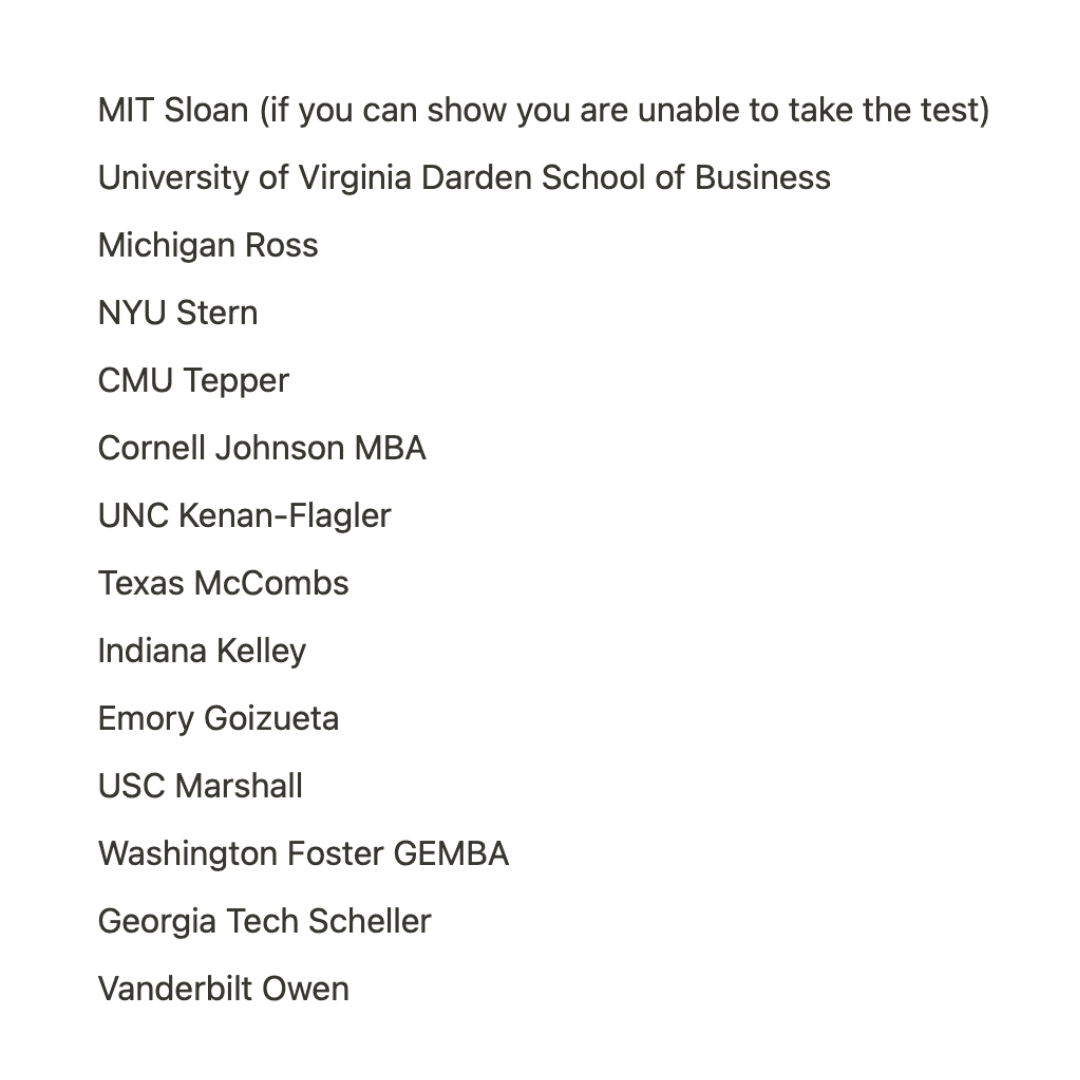
Several top MBA programs waive the GMAT requirement for certain applicants. These programs often consider factors such as work experience, academic background, and professional certifications when deciding whether to waive the GMAT. Some examples of top MBA programs that may waive the GMAT include Harvard Business School, Stanford Graduate School of Business, and Wharton School.
Eligibility Criteria for GMAT Waiver
To be eligible for a GMAT waiver, applicants typically need to meet certain criteria, such as having a strong academic record, significant work experience, or professional certifications like the CFA or CPA. The specific criteria vary by program, but common requirements include:
- A minimum number of years of work experience, often 5-10 years
- A strong academic record, including a high GPA and academic achievements
- Professional certifications or advanced degrees, such as a master's or Ph.D.
Benefits of GMAT Waiver
Waiving the GMAT requirement can be beneficial for applicants who have strong qualifications and experience, but may not perform well on standardized tests. The benefits of a GMAT waiver include:
- Time savings, as applicants do not need to prepare for and take the GMAT
- Cost savings, as applicants do not need to pay for GMAT preparation materials or testing fees
- Increased flexibility, as applicants can focus on other aspects of their application, such as essays and recommendations
Top MBA Programs with GMAT Waiver
Some top MBA programs that offer GMAT waivers include:
- MIT Sloan School of Management, which offers a GMAT waiver for applicants with significant work experience or advanced degrees
- University of Chicago Booth School of Business, which offers a GMAT waiver for applicants with strong academic records and professional experience
- Columbia Business School, which offers a GMAT waiver for applicants with professional certifications or advanced degrees
Which MBA program does not require GMAT?

There are several MBA programs that do not require the GMAT (Graduate Management Admission Test) as a prerequisite for admission. These programs often have other requirements, such as work experience, academic achievement, or other assessments, to evaluate a candidate's potential for success in the program. Some business schools may waive the GMAT requirement for certain applicants, such as those with significant work experience or a strong academic record.
Overview of GMAT-Free MBA Programs
These programs are designed to attract a diverse range of applicants, including those who may not have taken the GMAT or who have other qualifications that demonstrate their potential for success in an MBA program. Some examples of MBA programs that do not require the GMAT include:
- Online MBA programs that focus on practical skills and experience
- Executive MBA programs that cater to working professionals with significant experience
- Specialized MBA programs that focus on specific industries or fields, such as sustainability or entrepreneurship
Benefits of GMAT-Free MBA Programs
The benefits of GMAT-free MBA programs include increased flexibility and accessibility for applicants who may not have the time or resources to prepare for the GMAT. These programs also often have a more holistic approach to admissions, considering factors such as work experience, academic achievement, and personal statement. Some key benefits of GMAT-free MBA programs include:
- Increased diversity in the student body, as applicants from a wider range of backgrounds are encouraged to apply
- More flexibility in the application process, as applicants are not required to take the GMAT
- A more comprehensive approach to admissions, as business schools consider a range of factors beyond just test scores
Examples of GMAT-Free MBA Programs
There are many business schools that offer GMAT-free MBA programs, including some top-ranked institutions. Some examples include:
- The University of Cambridge's Judge Business School, which offers a GMAT-free MBA program for applicants with significant work experience
- The University of Oxford's Saïd Business School, which offers a GMAT-free MBA program for applicants with a strong academic record
- The Massachusetts Institute of Technology's Sloan School of Management, which offers a GMAT-free MBA program for applicants with strong technical skills and experience
Who qualifies for a GMAT waiver?

To qualify for a GMAT waiver, applicants typically need to meet specific criteria set by the institution or program they are applying to. These criteria can vary, but often include a combination of academic achievement, professional experience, and leadership skills. The GMAT waiver is usually considered for individuals who have demonstrated exceptional performance in their undergraduate studies, have significant work experience, or have achieved advanced degrees.
Eligibility Requirements
The eligibility requirements for a GMAT waiver can differ depending on the institution. However, some common requirements include a strong undergraduate GPA, particularly in quantitative subjects like mathematics or engineering, and a minimum number of years of professional experience. Applicants may also need to demonstrate leadership skills through their work experience or other activities.
- Most institutions require a minimum GPA of 3.0 or higher for eligibility.
- A minimum of 2-5 years of professional experience is often required, depending on the program.
- Leadership roles or management experience can also be a factor in considering a GMAT waiver.
Types of Candidates Who May Qualify
Certain types of candidates may be more likely to qualify for a GMAT waiver. These include individuals with advanced degrees, such as a master's or Ph.D., in a relevant field, and those with significant work experience in a field related to the program they are applying for. Military veterans and individuals with entrepreneurial experience may also be considered for a waiver.
- Candidates with Master's degrees in business-related fields may be eligible for a GMAT waiver.
- Those with 5 or more years of work experience in a management or leadership role may qualify.
- Entrepreneurs who have successfully managed their own businesses may also be considered for a waiver.
Application Process for a GMAT Waiver
The process for applying for a GMAT waiver involves submitting an application to the institution, which includes providing documentation to support the waiver request. This can include transcripts, resume, and letters of recommendation. Applicants may also need to write an essay explaining why they are requesting a waiver and how their experience and skills make them a strong candidate for the program.
- Applicants must submit a formal request for a GMAT waiver, usually as part of their application package.
- A personal statement or essay explaining the reasons for the waiver request is often required.
- Letters of recommendation from professional contacts can support the applicant's request for a waiver.
Does an online MBA need GMAT?

The requirement for a GMAT (Graduate Management Admission Test) score for an online MBA program varies depending on the institution and its specific admission policies. While some online MBA programs waive the GMAT requirement, others require it as part of the application process. The decision to require a GMAT score is often based on the program's accreditation, reputation, and admission standards.
GMAT Requirements for Online MBA Programs
The GMAT requirement for online MBA programs is influenced by several factors, including the program's ranking, specialization, and delivery format. Some online MBA programs may exempt applicants with significant work experience or other qualifications from submitting a GMAT score. The following are some key points to consider:
- The program's accreditation plays a significant role in determining the GMAT requirement, with AACSB-accredited programs often requiring a GMAT score.
- The program's reputation and selectivity also influence the! GMAT requirement, with more competitive programs often requiring a GMAT score.
- The applicant's background and qualifications are also taken into account, with applicants with strong work experience or other relevant qualifications potentially being exempt from the GMAT requirement.
Benefits of Submitting a GMAT Score for Online MBA Programs
Submitting a competitive GMAT score can be beneficial for applicants to online MBA programs, as it demonstrates their quantitative and verbal skills. A high GMAT score can also enhance an applicant's application, particularly if they have a weak undergraduate GPA or limited work experience. The following are some key benefits of submitting a GMAT score:
- A strong GMAT score can offset a low undergraduate GPA, demonstrating an applicant's academic ability.
- A competitive GMAT score can differentiate an applicant from others, particularly in a pool of applicants with similar work experience and qualifications.
- A high GMAT score can also increase an applicant's eligibility for scholarships and financial aid.
Alternatives to the GMAT for Online MBA Programs
Some online MBA programs accept alternative tests, such as the GRE (Graduate Record Examination), in place of the GMAT. Other programs may waive the standardized test requirement altogether, focusing instead on an applicant's work experience, letters of recommendation, and personal statement. The following are some key alternatives to the GMAT:
- The GRE is a common alternative to the GMAT, with some online MBA programs accepting both tests.
- Some online MBA programs may require other assessments, such as a math or statistics course, in place of the GMAT.
- A personal statement or essay may also be required, allowing applicants to demonstrate their motivation and goals for pursuing an online MBA.
Frequently Asked Questions
What are the eligibility criteria for online MBA programs with GMAT waiver?
The eligibility criteria for online MBA programs with GMAT waiver vary from institution to institution, but most programs require applicants to have a strong academic background, significant work experience, and a high level of professional achievement. Some programs may also require applicants to have a certain level of leadership experience or a strong record of community service. Additionally, some programs may require applicants to submit letters of recommendation or a personal statement outlining their career goals and motivations for pursuing an MBA. It's essential to research the specific eligibility criteria for each program and ensure that you meet the requirements before applying. Many online MBA programs with GMAT waiver also consider the applicant's undergraduate degree, work experience, and skill set when making admission decisions.
How can I increase my chances of getting a GMAT waiver for an online MBA program?
To increase your chances of getting a GMAT waiver for an online MBA program, you should focus on showcasing your professional experience, academic achievements, and leadership skills. Having a strong academic background, with a high GPAs and relevant coursework, can also be beneficial. Furthermore, highlighting your career progression, promotions, and achievements in your application can demonstrate your potential for success in an MBA program. Some online MBA programs may also consider alternative tests, such as the GRE or EA, so it's essential to check the program's requirements and prepare accordingly. Additionally, networking with alumni and current students can provide valuable insights and help you build relationships with the program's community.
What are the benefits of pursuing an online MBA program with a GMAT waiver?
Pursuing an online MBA program with a GMAT waiver offers several benefits, including convenience, flexibility, and time-saving. Without the need to prepare and take the GMAT, you can focus on your application and other aspects of your life. Online MBA programs with GMAT waiver also provide an opportunity to network with professionals from diverse backgrounds and industries, which can lead to valuable connections and career opportunities. Moreover, many online MBA programs with GMAT waiver offer specialized courses and concentrations that can help you develop expertise in a specific area, such as finance, marketing, or entrepreneurship. With the flexibility to complete coursework on your own schedule, you can balance your studies with your career and other responsibilities.
How do I choose the best online MBA program with a GMAT waiver that aligns with my career goals?
Choosing the best online MBA program with a GMAT waiver that aligns with your career goals requires careful research and consideration of several factors, including program reputation, curriculum, faculty expertise, and alumni network. You should also consider the program's format, duration, and cost to ensure it fits your lifestyle and budget. Additionally, looking into the program's accreditation, rankings, and reviews from current students and alumni can provide valuable insights into the program's quality and effectiveness. It's also essential to consider the program's specializations and electives to ensure they align with your career interests and goals. By weighing these factors and considering your own strengths and weaknesses, you can make an informed decision and choose the online MBA program with GMAT waiver that best supports your career aspirations.
Leave a Reply