Online MBA in Change Management: Leading Organizational Change

In today's fast-paced business environment, organizations must be able to adapt and evolve to remain competitive. An Online MBA in Change Management provides professionals with the skills and knowledge necessary to lead organizational change effectively. This specialized degree program focuses on the strategic, operational, and human aspects of change management, empowering graduates to drive transformation and innovation within their organizations. With a strong emphasis on leadership, communication, and strategic planning, an Online MBA in Change Management can help professionals navigate complex change initiatives and achieve successful outcomes. This degree is ideal for those seeking to advance their careers.
Unlocking Organizational Potential with Online MBA in Change Management
The Online MBA in Change Management is a postgraduate degree program that focuses on equipping students with the knowledge, skills, and competencies required to lead and manage organizational change effectively. This program is designed to help professionals develop a deep understanding of the complexities involved in change management and to provide them with the tools and strategies needed to navigate these challenges successfully.
Understanding the Fundamentals of Change Management
Change management is a systematic approach to dealing with change, both from the perspective of an organization and the individual. It involves the application of a structured process and set of tools to manage the people side of change in order to achieve the desired outcomes. The Online MBA in Change Management delves into the theoretical foundations of change management, including the models and frameworks that underpin this field. Students learn about the key concepts, such as organizational culture, leadership, and communication, which are crucial for effective change management.
Developing Strategic Change Management Plans
A critical component of the Online MBA in Change Management is the development of strategic plans for managing change. This involves analyzing the organization's readiness for change, identifying the stakeholders involved, and designing interventions to support the change process. Students learn how to use tools and techniques, such as stakeholder analysis and change impact assessments, to inform their planning. The program emphasizes the importance of flexibility and adaptability in change management, recognizing that plans must often be adjusted in response to unforeseen circumstances.
Leading and Managing Change in a Global Context
The Online MBA in Change Management recognizes that organizations operate in a global and increasingly complex environment. As such, the program prepares students to lead and manage change in multicultural and geographically dispersed teams. This involves understanding the cultural and regulatory aspects of change management, as well as the technological tools that facilitate global communication and collaboration. Students explore the challenges and opportunities associated with managing change across borders and learn how to tailor their approaches to different contexts.
Assessing and Evaluating the Impact of Change
The ability to assess and evaluate the impact of change is a key skill for professionals in change management. The Online MBA in Change Management covers the methodologies and metrics used to measure the effectiveness of change initiatives. Students learn how to design and implement evaluation studies, using quantitative and qualitative methods to assess the outcomes of change. This includes understanding how to use data analytics to inform decision-making and how to report findings to stakeholders.
Building Resilience and Managing Resistance to Change
Change can be stressful and disruptive for individuals and organizations, leading to resistance and decreased productivity. The Online MBA in Change Management addresses the importance of building resilience and managing resistance to change. Students explore the psychological and social factors that influence how people respond to change and learn strategies for engaging stakeholders and minimizing resistance. This includes understanding how to communicate effectively, build trust, and empower individuals to embrace change.
| Course Module | Description |
|---|---|
| Introduction to Change Management | Covers the fundamentals of change management, including models and frameworks. |
| Strategic Change Management | Focuses on developing strategic plans for managing change, including analysis and design. |
| Global Change Management | Explores the global context of change management, including cultural and regulatory aspects. |
| Evaluation and Impact Assessment | Covers the methodologies and metrics used to assess the effectiveness of change initiatives. |
| Building Resilience and Managing Resistance | Addresses the importance of building resilience and managing resistance to change, including strategies for engagement and empowerment. |
What are the 5 C's of change management?
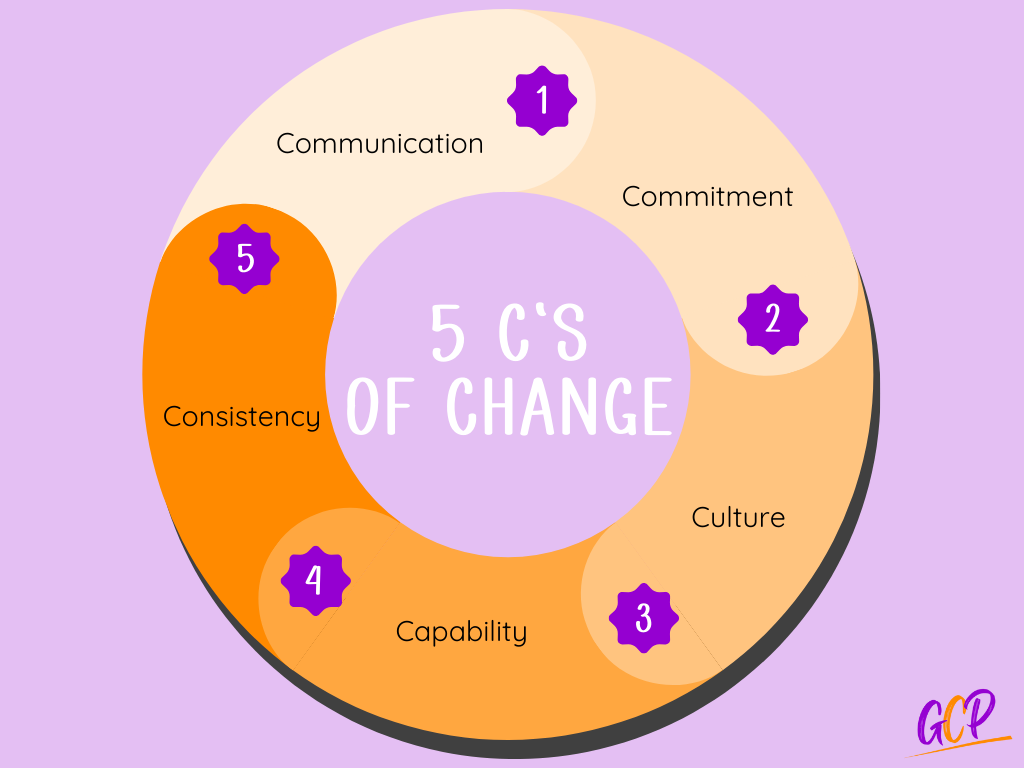
The 5 C's of change management are a framework used to guide organizations through the process of change. They are: culture, communication, competence, commitment, and catalyst. These components are essential for successful change management as they help organizations to prepare for, implement, and sustain change.
Understanding the 5 C's of Change Management
The 5 C's of change management are a structured approach to managing change. This approach helps organizations to identify the key elements that need to be addressed in order to achieve successful change. The 5 C's are:
- Culture: The organization's culture plays a critical role in determining its ability to adapt to change.
- Communication: Effective communication is essential for keeping stakeholders informed and engaged throughout the change process.
- Competence: The organization's competence refers to its ability to execute the change successfully.
Implementing the 5 C's of Change Management
Implementing the 5 C's of change management requires a deliberate approach. Organizations need to:
- Assess their current culture and identify areas for improvement.
- Develop a communication plan that ensures stakeholders are informed and engaged throughout the change process.
- Build the competence of their employees to execute the change successfully.
Benefits of the 5 C's of Change Management
The 5 C's of change management offer several benefits to organizations. These include:
- Improved commitment from employees and stakeholders.
- Increased competence in executing change.
- Enhanced catalyst for sustained change.
What is the best degree for a change manager?

The best degree for a change manager is often a subject of debate, as it depends on various factors such as the industry, organization, and specific requirements of the role. However, some of the most relevant degrees for a change manager include Business Administration, Organizational Development, and Industrial Psychology. These degrees provide a strong foundation in leadership, communication, and project management, which are essential skills for a change manager.
Key Skills for a Change Manager
A change manager requires a unique combination of skills, including strategic thinking, problem-solving, and collaboration. Some of the key skills for a change manager include:
- Communication: The ability to effectively communicate with stakeholders, including employees, customers, and executives.
- Leadership: The ability to lead and motivate teams through change initiatives and transitions.
- Analytical skills: The ability to analyze data and metrics to inform change management decisions.
Best Degrees for a Change Manager
Some of the best degrees for a change manager include Master's in Business Administration (MBA), Master's in Organizational Development (MOD), and Master's in Industrial Psychology (MIP). These degrees provide advanced training in change management, leadership, and organizational behavior. Some of the key benefits of these degrees include:
- Advanced knowledge: The ability to apply theoretical frameworks and models to real-world change management scenarios.
- Practical experience: The opportunity to gain hands-on experience through internships, case studies, and group projects.
- Networking opportunities: The chance to connect with professionals and peers in the field of change management.
Specialized Certifications for Change Managers
In addition to a degree, change managers can also benefit from specialized certifications, such as the Certified Change Manager (CCM) or the Prosci Certified Change Practitioner (CCP). These certifications demonstrate expertise and knowledge in change management and can be beneficial for career advancement. Some of the key benefits of these certifications include:
- Enhanced credibility: The ability to demonstrate expertise and knowledge in change management to employers and clients.
- Improved skills: The opportunity to develop practical skills and knowledge in change management through training and education.
- Increased earning potential: The potential to increase earnings through career advancement and promotion.
What are the 7 R's of change management?
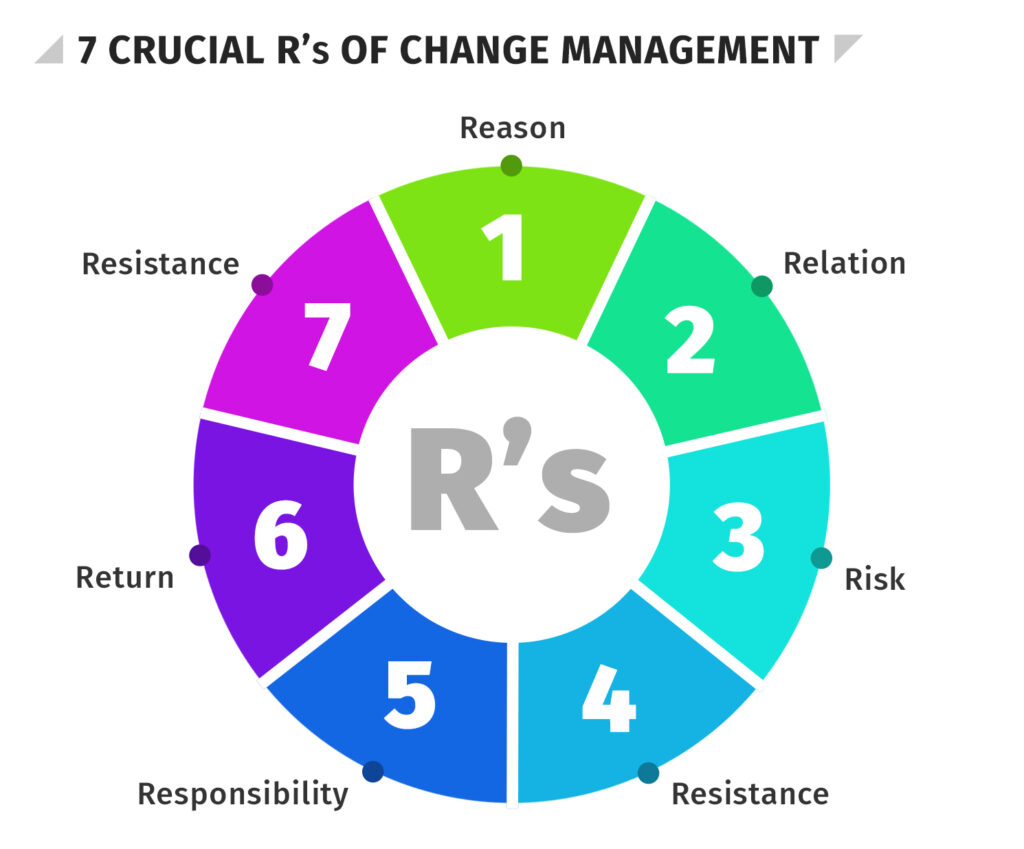
The 7 R's of change management are a framework used to ensure that all aspects of a change are properly considered and planned for. This framework is essential in organizational change management, as it helps to minimize the risks associated with change and ensure a smooth transition. The 7 R's are:
1. Reason: The reason for the change,
2. Risks: The risks associated with the change,
3. Resources: The resources required to implement the change,
4. Roles: The roles and responsibilities of those involved in the change,
5. Responsibilities: The responsibilities of each role,
6. Reactions: The potential reactions of stakeholders to the change, and
7. Return: The expected return on investment from the change.
Understanding the 7 R's Framework
The 7 R's framework is a structured approach to change management that helps organizations to identify and mitigate potential risks. By considering each of the 7 R's, organizations can ensure that they have a comprehensive plan in place to manage the change. Some key benefits of using the 7 R's framework include:
- Improved communication and stakeholder engagement
- Reduced risk and increased confidence in the change
- Increased return on investment from the change
Applying the 7 R's in Practice
In practice, the 7 R's framework can be applied to a wide range of change initiatives, from small-scale process improvements to large-scale organizational transformations. By considering each of the 7 R's, organizations can ensure that they have a thorough understanding of the change and its potential impacts. Some key steps involved in applying the 7 R's framework include:
- Defining the reason for the change and the expected outcomes
- Identifying the risks and resources required to implement the change
- Assigning roles and responsibilities to those involved in the change
Benefits of the 7 R's Framework
The 7 R's framework offers a number of benefits to organizations, including improved stakeholder engagement, reduced risk, and increased return on investment. By using the 7 R's framework, organizations can ensure that they have a comprehensive plan in place to manage the change and minimize potential disruptions. Some key benefits of using the 7 R's framework include:
- Improved project management and control
- Increased stakeholder engagement and buy-in
- Reduced risk and increased confidence in the change
What is organizational change in MBA?

Organizational change in MBA refers to the process of transforming an organization's structure, culture, and strategy to adapt to changing market conditions, technologies, and customer needs. This can involve reorganizing departments, redefining job roles, and implementing new policies and procedures. The goal of organizational change is to improve the organization's efficiency, effectiveness, and competitiveness.
Types of Organizational Change
Organizational change can take many forms, including strategic change, structural change, and cultural change. Some common types of organizational change include:
- Mergers and acquisitions: combining two or more organizations to form a new entity.
- Restructuring: reorganizing the organization's hierarchy and departments.
- Cultural transformation: changing the organization's values, beliefs, and behaviors.
Models of Organizational Change
There are several models of organizational change that can be used to guide the change process, including Lewin's change management model, Kotter's eight-step change model, and McKinsey's 7S framework. These models provide a framework for understanding the change process and identifying the key steps and stakeholders involved. For example:
- Assessing the need for change: identifying the drivers of change and the risks of not changing.
- Developing a change strategy: creating a plan for implementing the change.
- Communicating the change: informing stakeholders about the change and its implications.
Challenges of Organizational Change
Implementing organizational change can be challenging due to resistance from employees, managers, and other stakeholders. Some common challenges include:
- Managing resistance to change: addressing concerns and fears about the change.
- Building a coalition of support: identifying and engaging key stakeholders.
- Sustaining the change: ensuring that the change is embedded in the organization's culture and practices.
Frequently Asked Questions
What is the Online MBA in Change Management: Leading Organizational Change?
The Online MBA in Change Management: Leading Organizational Change is a master's degree program designed to equip students with the knowledge and skills necessary to lead and manage organizational change in a rapidly changing business environment. This program focuses on the strategic management of change, including the development of leadership skills, communication strategies, and change management models. Through a combination of online coursework, case studies, and group projects, students will learn how to analyze organizational needs, develop change initiatives, and implement sustainable solutions. The program is ideal for working professionals who want to advance their careers in management and leadership positions.
What are the key benefits of pursuing an Online MBA in Change Management?
Pursuing an Online MBA in Change Management: Leading Organizational Change offers several key benefits, including the ability to develop advanced leadership skills, strategic thinking, and problem-solving abilities. The program also provides students with a global perspective on change management, allowing them to understand the complexities of organizational change in different cultural contexts. Additionally, the online format of the program offers flexibility and convenience, allowing students to balance their academic pursuits with their professional responsibilities. The program also provides opportunities for networking and collaboration with other professionals in the field, which can lead to new career opportunities and professional growth.
What are the career opportunities for graduates! of the Online MBA in Change Management program?
Graduates of the Online MBA in Change Management: Leading Organizational Change program can pursue a variety of career opportunities in management and leadership positions. Some potential career paths include change management consultant, organizational development manager, strategic management specialist, and leadership coach. The program also prepares students for executive-level positions, such as CEO, CFO, and COO. Additionally, graduates can work in a variety of industries, including finance, healthcare, technology, and non-profit. The program's focus on strategic management and leadership also prepares students to start their own businesses or lead entrepreneurial ventures.
How does the Online MBA in Change Management program support student success?
The Online MBA in Change Management: Leading Organizational Change program supports student success through a variety of resources and services. The program offers academic advising and career counseling to help students achieve their academic and professional goals. The program also provides technical support and online tutorials to help students navigate the online learning platform. Additionally, the program offers opportunities for feedback and assessment, allowing students to track their progress and improve their performance. The program's faculty and staff are also committed to student success, providing individualized attention and support to help students succeed in the program. Furthermore, the program's alumni network provides lifetime support and connection to a global community of change management professionals.
Leave a Reply