
MBA in Sustainability: Careers in ESG and Responsible Business
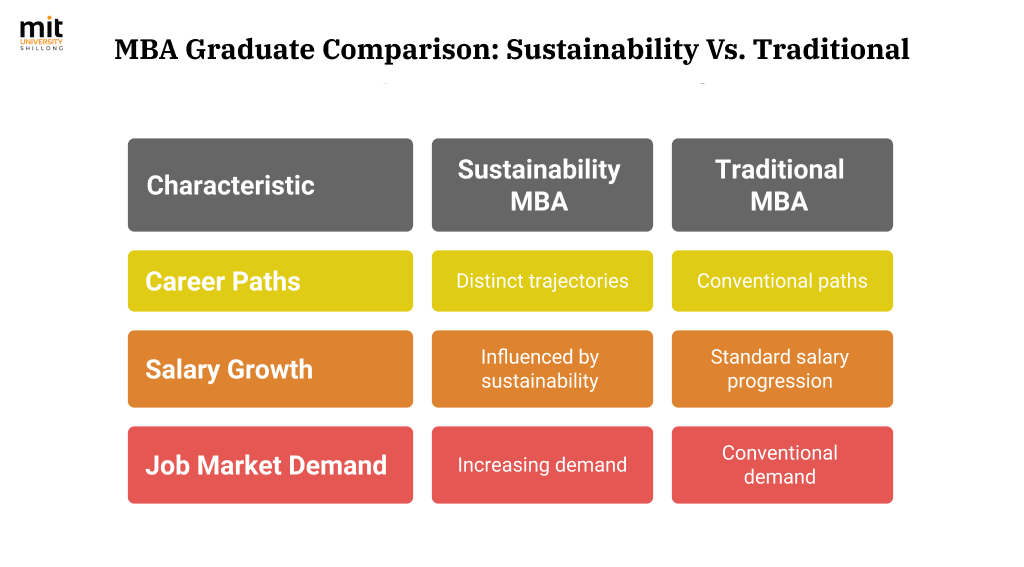
As sustainability moves from a reputational concern to a core business priority, companies are rethinking how they create value, manage risk, attract capital, and respond to stakeholder expectations. Environmental, Social, and Governance (ESG) considerations are now shaping boardroom decisions, investment strategies, supply chain models, brand positioning, and long-term growth plans. In this context, an MBA in Sustainability has become far more than a niche qualification. It is increasingly a strategic degree for professionals who want to lead the transition toward more resilient, ethical, and future-oriented business models.
For many students and early-career managers, the key question is no longer whether sustainability matters in business. It is how to build a career around it. What roles exist in ESG and responsible business? Which skills do employers value most? And how does an MBA prepare professionals to move from sustainability awareness to business leadership?
The answer lies in the growing need for managers who can combine commercial judgment with social and environmental intelligence. An MBA in Sustainability is designed to develop exactly this profile. It equips professionals to understand financial performance, organizational strategy, stakeholder communication, operations, and innovation through the lens of sustainability. Rather than treating ESG as a side topic, the degree integrates responsible business thinking into the core functions of management.
This article explores how an MBA in Sustainability prepares graduates for careers in ESG and responsible business, what job paths are available, which capabilities matter most, and why this field is rapidly becoming one of the most dynamic areas in modern management education.
1. Why Sustainability Has Become a Core Business Priority
Sustainability used to be associated mainly with compliance, philanthropy, or corporate social responsibility reports. Today, it has become a strategic issue tied directly to competitiveness and business resilience. Companies face growing pressure from investors, regulators, customers, employees, and partners to demonstrate that they are managing their environmental and social impact responsibly while maintaining sound governance structures.
This shift has several drivers.
1.1 Investor Pressure and Capital Allocation
Institutional investors, private equity firms, banks, and asset managers increasingly evaluate companies not only on traditional financial metrics, but also on how well they manage climate risk, governance quality, human capital, supply chain ethics, and long-term resilience. Businesses that can demonstrate credible ESG performance often enjoy stronger investor confidence and broader access to capital.
For that reason, companies need professionals who understand both finance and sustainability. They need managers who can translate ESG concerns into business language, investment logic, and measurable value creation.
1.2 Consumer Expectations and Brand Trust
Modern consumers are more likely to scrutinize the environmental footprint, labor practices, sourcing decisions, and ethical standards of the brands they support. Sustainability has become a differentiator in industries such as retail, food, energy, manufacturing, mobility, hospitality, and technology.
However, consumers are also increasingly skeptical of vague claims and greenwashing. This means organizations need leaders who can build sustainability into products, operations, and communication strategies in a credible way.
1.3 Regulation and Reporting Requirements
Across sectors, businesses face stricter disclosure requirements, environmental standards, governance expectations, and due diligence obligations. Even when regulation varies by market, the overall trend is clear: responsible business practices are becoming more formalized, measurable, and enforceable.
That creates strong demand for professionals who can navigate reporting frameworks, stakeholder expectations, compliance obligations, and internal transformation processes.
1.4 Talent Attraction and Organizational Culture
Employees, especially younger professionals, increasingly want to work for organizations whose values align with their own. Sustainability is not only a market issue; it is a talent issue. Firms that fail to engage seriously with responsible business practices may struggle to attract and retain motivated, mission-driven professionals.
As a result, companies need leaders who can connect sustainability with culture, leadership, employee engagement, and organizational purpose.
2. What Is an MBA in Sustainability?
An MBA in Sustainability is a management degree that combines traditional business education with specialized knowledge in environmental strategy, social impact, responsible leadership, ethical governance, and sustainable value creation.
Unlike general sustainability courses that may focus mostly on policy or environmental science, this MBA is rooted in business decision-making. It prepares students to understand sustainability not as an abstract ideal, but as a set of practical management challenges and opportunities.
2.1 Core MBA Foundations
Most programs include fundamental MBA subjects such as:
Corporate finance
Managerial accounting
Marketing strategy
Operations management
Organizational behavior
Leadership and change management
Business analytics
Strategy and competitive advantage
These subjects ensure graduates develop solid commercial and managerial competence.
2.2 Sustainability-Focused Content
What makes the degree distinctive is the integration of sustainability-specific modules, often including:
ESG strategy and measurement
Sustainable finance and impact investing
Climate risk and business resilience
Corporate governance and ethics
Circular economy and sustainable operations
Responsible supply chain management
Social entrepreneurship
Stakeholder engagement
Sustainability reporting and disclosure
Innovation for inclusive and low-carbon growth
This combination helps students develop a multidimensional understanding of how sustainability interacts with every function of the firm.
2.3 A Leadership-Oriented Degree
An MBA in Sustainability is not just about understanding environmental or social issues. It is about leading organizations through complex transitions. Students are trained to identify trade-offs, build business cases, align stakeholders, prioritize long-term value, and implement responsible strategies at scale.
In that sense, the degree is particularly relevant for professionals who want to operate at the intersection of strategy, ethics, performance, and transformation.
3. What ESG Really Means in a Business Context
Before exploring career paths, it is useful to clarify what ESG means in practice.
ESG stands for Environmental, Social, and Governance. It is a framework used to assess how organizations manage non-financial factors that affect risk, reputation, compliance, resilience, and long-term value.
3.1 Environmental
The environmental dimension focuses on how a company interacts with the natural world. This includes:
Carbon emissions and decarbonization
Energy efficiency
Water use
Waste management
Pollution control
Biodiversity impact
Sustainable sourcing
Climate adaptation and transition planning
Professionals in this area help businesses reduce environmental harm while improving operational efficiency and long-term resilience.
3.2 Social
The social dimension concerns how a company relates to people, communities, workers, and customers. It includes:
Labor standards
Diversity, equity, and inclusion
Human rights
Health and safety
Employee well-being
Supply chain labor practices
Community impact
Product responsibility and customer trust
Social issues have become central to employer branding, operational continuity, and corporate legitimacy.
3.3 Governance
Governance focuses on the systems, controls, and leadership structures that shape decision-making inside an organization. Key issues include:
Board oversight
Executive accountability
Ethics and anti-corruption
Risk management
Transparency
Internal controls
Data integrity
Shareholder rights
Responsible executive incentives
Strong governance enables sustainability to move from marketing language into measurable, accountable management practice.
4. Why an MBA Is Especially Valuable for ESG Careers
Many people enter sustainability from environmental science, public policy, communications, or legal backgrounds. Those paths remain valuable. However, the reason an MBA can be especially powerful is that ESG careers increasingly require business fluency.
Companies do not simply need advocates for sustainability. They need managers who can connect sustainability goals with profitability, growth, operations, finance, and competitive positioning.
4.1 Business Case Development
An MBA teaches students how to make strategic and financial arguments. This is essential in ESG roles, where professionals must often justify investments in energy transition, reporting systems, supply chain redesign, workforce initiatives, or governance improvements.
4.2 Cross-Functional Decision-Making
Sustainability touches every part of the business: procurement, HR, finance, legal, operations, marketing, investor relations, and executive leadership. MBA graduates are trained to work across functions and align diverse stakeholders.
4.3 Leadership and Change Management
Embedding responsible business practices often requires major organizational change. Leaders need to influence culture, design incentives, manage resistance, and build internal momentum. MBA programs typically devote significant attention to leadership, negotiation, and change management.
4.4 Quantitative and Strategic Thinking
Many ESG roles require the ability to interpret data, evaluate KPIs, assess business risks, benchmark performance, and design practical roadmaps. The analytical training in an MBA can be highly relevant here.
5. Career Paths After an MBA in Sustainability
One of the strongest arguments for this degree is the breadth of career opportunities it can unlock. Graduates are not limited to one narrow function. Depending on the program and the student’s prior experience, they may enter strategy, consulting, finance, operations, reporting, impact, or leadership-track roles.
Below are some of the most relevant career paths.
5.1 ESG Analyst or ESG Manager
These roles focus on assessing, tracking, and improving an organization’s ESG performance. Responsibilities may include collecting sustainability data, monitoring key metrics, supporting disclosure processes, benchmarking against peers, and helping define ESG priorities.
In some companies, ESG Managers work closely with investor relations, legal, communications, operations, and the executive team to ensure that sustainability efforts are measurable and aligned with business strategy.
Typical responsibilities include:
Supporting ESG data collection and analysis
Coordinating internal reporting processes
Tracking environmental and social KPIs
Monitoring emerging ESG standards and stakeholder expectations
Assisting with materiality assessments
Helping translate ESG priorities into action plans
This is often a strong entry point for graduates who want broad exposure to how sustainability is operationalized in business.
5.2 Sustainability Consultant
Consulting is one of the most attractive paths for MBA graduates interested in sustainability. Consultants help organizations address issues such as carbon strategy, ESG integration, responsible supply chains, sustainable transformation, stakeholder engagement, reporting readiness, or circular business models.
A sustainability consultant may work in a major consulting firm, a boutique advisory practice, or an internal transformation team. The role is ideal for professionals who enjoy structured problem-solving, client interaction, project-based work, and strategic analysis.
Common areas of work include:
ESG strategy design
Climate transition planning
Sustainability roadmap development
Responsible sourcing and supply chain audits
Sustainability reporting advisory
Impact measurement
Sustainable innovation and product strategy
This career path suits people who want to work across industries and accelerate their learning curve.
5.3 Corporate Sustainability Manager
Corporate Sustainability Managers are often responsible for embedding sustainability into the company’s day-to-day business model. This role can sit in strategy, operations, corporate affairs, or a dedicated sustainability function.
They often lead internal initiatives such as emission reduction, supplier standards, employee engagement, packaging redesign, responsible procurement, or cross-functional sustainability governance.
This role typically requires:
Strong project management
Stakeholder coordination
Internal communication
KPI tracking
Business-case development
Executive reporting
An MBA is especially useful here because the role requires balancing ambition with feasibility and integrating sustainability with commercial realities.
5.4 Sustainable Finance or Impact Investing Professional
As sustainability becomes more important in capital markets, there is growing interest in roles that connect finance with environmental and social outcomes. Graduates with an MBA in Sustainability may pursue careers in:
Sustainable finance
ESG investing
Impact investing
Responsible banking
Corporate sustainability finance
Green bonds and climate-related financing
These professionals evaluate investment opportunities, assess ESG risks, support portfolio decisions, and help direct capital toward more responsible business models.
This path is particularly attractive for students with prior backgrounds in economics, accounting, corporate finance, banking, or investment analysis.
5.5 Responsible Supply Chain or Procurement Specialist
Supply chains are one of the most critical areas in responsible business. Many organizations are under pressure to improve traceability, labor conditions, ethical sourcing, supplier governance, emissions performance, and resilience across global operations.
Professionals in this field may work on:
Supplier due diligence
Sustainable sourcing policies
Vendor risk assessment
Ethical procurement standards
Scope 3 emissions reduction
Supply chain transparency
Human rights compliance in operations
Because supply chains are complex, cross-border, and operationally critical, this area offers strong long-term career relevance.
5.6 CSR, Social Impact, or Shared Value Manager
Although the term CSR has evolved, many organizations still maintain dedicated functions related to social impact, community engagement, philanthropy, responsible partnerships, and inclusive business development.
A graduate with an MBA in Sustainability may work in roles that focus on:
Community investment
Employee volunteering and engagement
Social impact strategy
Inclusive growth initiatives
Public-private partnerships
Corporate foundation leadership
The strongest professionals in this area are those who can move beyond purely reputational initiatives and connect social impact to business value, legitimacy, and stakeholder trust.
5.7 Sustainability Reporting and Disclosure Specialist
As companies face growing pressure to disclose ESG performance accurately, reporting has become a major career area. Professionals in this field help organizations gather data, structure reports, align with frameworks, and communicate performance clearly to investors and stakeholders.
Responsibilities may include:
Coordinating sustainability reports
Mapping disclosure requirements
Working with finance, risk, legal, and operations teams
Improving data quality and governance
Supporting assurance and audit readiness
Translating technical metrics into business narratives
This path is especially relevant for detail-oriented professionals who are strong in analysis, communication, and compliance-oriented project management.
5.8 ESG Risk and Compliance Professional
Sustainability is increasingly linked to enterprise risk. Climate events, regulatory shifts, labor controversies, supply chain failures, governance breakdowns, and reputational crises can all create serious business consequences.
Professionals in ESG risk and compliance help organizations anticipate, assess, and mitigate these issues. They may work in:
Risk management teams
Internal audit
Compliance functions
Governance offices
Consulting firms
Financial institutions
An MBA in Sustainability helps professionals understand how risks are created, measured, escalated, and integrated into strategic planning.
5.9 Social Entrepreneur or Sustainable Business Founder
Not all graduates enter corporate roles. Some use the degree to launch or scale ventures focused on renewable energy, circular economy solutions, responsible consumer products, inclusive technology, climate adaptation, sustainable food systems, or mission-driven services.
For these professionals, the MBA provides:
Business planning skills
Financial literacy
Market-entry strategy
Investor communication ability
Innovation frameworks
This path suits people who want to build organizations around purpose from the start rather than transform them from within.
6. Skills You Build During an MBA in Sustainability
The value of the degree depends not only on subject knowledge, but on the practical capabilities it develops. Employers in ESG and responsible business increasingly look for professionals who can operate at the intersection of analysis, strategy, communication, and implementation.
6.1 Strategic Thinking
Students learn how to evaluate long-term trends, identify business risks and opportunities, prioritize initiatives, and connect sustainability goals with organizational strategy.
6.2 Financial and Commercial Literacy
A strong sustainability professional must understand budgets, value drivers, investment logic, return expectations, margin pressures, and operating realities. This is one of the major advantages of an MBA pathway.
6.3 Data Interpretation and KPI Management
ESG work depends heavily on metrics. MBA students often learn how to work with dashboards, performance indicators, materiality analysis, and data-driven decision-making.
6.4 Stakeholder Management
Sustainability leadership requires the ability to engage executives, employees, suppliers, investors, customers, regulators, and community actors. Programs often strengthen communication, influence, and negotiation skills.
6.5 Ethical and Systems Thinking
Many sustainability problems are interconnected and involve trade-offs. Students learn to think in systems, evaluate second-order effects, and approach decisions with a strong ethical framework.
6.6 Innovation and Problem-Solving
Responsible business requires new business models, new operating practices, new technologies, and new partnerships. MBA programs frequently train students in innovation, design thinking, and applied problem-solving.
6.7 Change Leadership
Perhaps most importantly, students learn how to lead transformation. Sustainability is not just about setting goals. It is about moving organizations from intent to execution.
7. Industries Where Graduates Can Work
An MBA in Sustainability does not restrict graduates to a single sector. In fact, the relevance of ESG spans almost every major industry.
7.1 Financial Services
Banks, insurers, asset managers, and investment firms need professionals who can integrate ESG into risk analysis, lending criteria, portfolio strategy, and stakeholder communication.
7.2 Consumer Goods and Retail
Brands in these sectors face intense pressure regarding sourcing, packaging, labor practices, product transparency, and circularity.
7.3 Energy and Utilities
This sector is central to the sustainability transition. Roles may involve decarbonization strategy, transition risk, stakeholder engagement, and renewable business development.
7.4 Manufacturing and Industrial Operations
Sustainability issues here include energy use, emissions, waste, water intensity, resource efficiency, supply chain resilience, and regulatory compliance.
7.5 Technology
Tech companies increasingly face scrutiny over governance, energy use, labor issues, AI ethics, privacy, and responsible innovation.
7.6 Healthcare and Pharmaceuticals
Responsible access, ethical sourcing, governance, community health impact, and sustainable operations are all relevant areas in this field.
7.7 Consulting and Professional Services
Advisory firms continue to expand sustainability-related offerings across strategy, operations, reporting, transformation, and risk.
8. Who Should Consider This Degree?
An MBA in Sustainability can be a strong option for several profiles.
8.1 Mid-Career Professionals Seeking Purpose and Progression
Professionals in operations, finance, marketing, HR, consulting, procurement, or project management may use the degree to pivot into roles with greater strategic relevance and mission alignment.
8.2 Managers Looking to Lead Transformation
Those already working inside organizations may want the skills to integrate sustainability into broader business functions and move toward leadership roles.
8.3 Entrepreneurs and Innovators
Founders who want to build commercially viable businesses with environmental or social impact can benefit from the degree’s blend of management and mission.
8.4 Finance Professionals Interested in ESG Capital Flows
Analysts, bankers, accountants, and investors may use the MBA to strengthen their sustainability expertise and reposition themselves for emerging finance roles.
9. Challenges of Working in ESG and Responsible Business
While the field is attractive, it is important to be realistic. ESG and responsible business careers are dynamic, but they also come with complexity.
9.1 Ambiguity and Evolving Standards
The field changes quickly. Expectations, frameworks, priorities, and definitions continue to evolve. Professionals must remain adaptable and intellectually flexible.
9.2 Internal Resistance
Not every organization is equally mature. Sustainability leaders often have to influence teams that are skeptical, overloaded, or focused narrowly on short-term results.
9.3 Balancing Idealism with Practicality
One of the biggest professional challenges is avoiding two extremes: moral language without execution, and commercial pragmatism without meaningful impact. Strong leaders learn to bridge the two.
9.4 Measurement Difficulties
Some sustainability outcomes are hard to quantify, compare, or communicate. Professionals must become comfortable working with imperfect data while still pushing for rigor and accountability.
These challenges do not reduce the value of the field. They are precisely why organizations need capable, business-minded professionals.
10. How to Evaluate an MBA in Sustainability
Not all programs are equally strong. Prospective students should assess programs carefully based on career goals and industry interests.
Key questions include:
10.1 Does the Program Integrate Sustainability into Core Business Subjects?
The strongest programs do not isolate sustainability in a few elective modules. They embed it into finance, strategy, operations, leadership, and innovation.
10.2 Are There Practical Projects or Industry Partnerships?
Real-world consulting projects, live case work, internships, corporate collaborations, and applied research can significantly improve career outcomes.
10.3 Does the Faculty Combine Academic and Industry Expertise?
A strong program usually balances conceptual rigor with practical business insight.
10.4 What Types of Roles Do Graduates Enter?
Career outcomes matter. Look for evidence that graduates move into ESG, consulting, finance, strategy, or transformation roles.
10.5 Does the Program Match Your Career Direction?
Some MBAs emphasize corporate transformation, others sustainable finance, others entrepreneurship or social impact. The best choice depends on your intended path.
11. Long-Term Career Value of the Degree
An MBA in Sustainability should not be seen only as preparation for a first ESG role. Its long-term value lies in positioning professionals for leadership in a business environment where responsibility, resilience, and stakeholder accountability are becoming central to success.
Over time, graduates may progress into roles such as:
Head of Sustainability
ESG Director
Responsible Investment Manager
Strategy Director with sustainability oversight
Chief Impact Officer
Transformation lead
Risk and governance leader
Sustainable operations executive
Founder of a purpose-driven business
As sustainability becomes more integrated into mainstream business management, the professionals who can connect purpose with performance are likely to become increasingly influential.
12. Final Thoughts
An MBA in Sustainability is ultimately about preparing leaders for a new business reality. Organizations are no longer judged only by what they earn, but by how they earn it, how they govern themselves, how they treat people, how they manage resources, and how they prepare for the future.
Careers in ESG and responsible business are growing because these questions now sit at the center of corporate strategy, investor confidence, regulatory readiness, and social legitimacy. Companies need professionals who can move beyond slogans and bring commercial discipline, analytical rigor, and leadership capability to sustainability challenges.
That is where an MBA can make a real difference.
For professionals who want careers that combine strategic influence, long-term relevance, and meaningful impact, this degree offers a powerful platform. It equips graduates not only to understand responsible business, but to shape it from within. In a world where sustainable value creation is becoming a defining measure of management quality, that combination is likely to remain in demand for years to come.
Leave a Reply