
How to Build Leadership Skills During an MBA Program
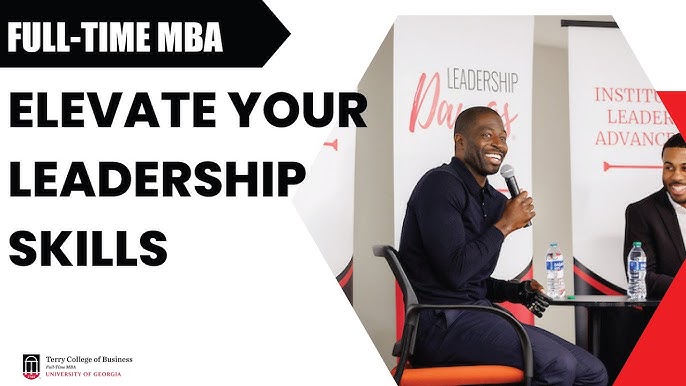
An MBA is often described as a degree for future leaders, but leadership does not appear automatically just because someone enrolls in business school. That is one of the biggest misconceptions students bring into an MBA program. The curriculum can expose you to strategy, finance, operations, marketing, and decision-making, but leadership is built through action, repetition, reflection, and responsibility. In other words, an MBA gives you the environment to develop leadership, but it does not do the work for you.
That distinction matters more than ever. Recruiter and employer data consistently shows that the market values leadership-related capabilities, but it values them as demonstrated skills, not just as claims on a résumé. GMAC’s 2025 Corporate Recruiters Survey says employers continue to trust graduate management education to develop leaders who can navigate complexity, and it highlights problem-solving, strategic thinking, and communication among the most valued capabilities in business-school talent. At the same time, the World Economic Forum’s Future of Jobs Report 2025 identifies leadership and social influence as one of the skills increasing in importance, alongside analytical thinking, resilience, and AI-related capabilities.
That means the question is not whether leadership matters during an MBA. It clearly does. The real question is how to build it in a way that becomes visible, credible, and useful after graduation. Leadership in an MBA setting is not only about becoming class president or leading a student club, although those can help. It is also about how you handle team conflict, how you communicate under pressure, how you influence without authority, how you make decisions with incomplete information, and how you turn business knowledge into action.
AACSB’s 2025 State of Business Education report reinforces this broader view. The report says stakeholders increasingly emphasize durable, human-centered skills such as communication, resilience, and ethical leadership alongside technical fluency, especially in AI. It also notes the growing importance of experiential learning and interdisciplinary approaches in preparing students for dynamic careers. That is a useful lens for MBA students because it suggests that leadership today is no longer just about charisma or hierarchy. It is about judgment, adaptability, collaboration, and the ability to guide action in complex environments.
So if you want to know how to build leadership skills during an MBA program, the answer is not “take a leadership class and move on.” The answer is to use the MBA as a training ground: in classrooms, team projects, internships, student organizations, feedback sessions, recruiting processes, and real-world problem-solving. Below is a detailed guide to how that actually works.
Understand What Leadership Really Means in an MBA Context
Before trying to build leadership, it helps to define it correctly. Many MBA students start with a narrow view: leadership means being in charge, speaking confidently, or having a formal title. In reality, leadership during an MBA is usually more subtle and more practical.
In a business-school environment, leadership often looks like this:
helping a team move forward when priorities are unclear
making decisions when the information is incomplete
communicating clearly when people disagree
creating accountability without creating friction
staying calm under pressure
turning ideas into action
helping others perform better, not only showcasing yourself
This matters because many post-MBA roles do not begin with formal authority. Even when graduates enter strong leadership-track positions, they usually have to influence peers, clients, senior stakeholders, and cross-functional teams before they ever manage large teams directly. NACE’s Job Outlook 2025 supports this broader view of readiness: employers rate communication, teamwork, professionalism, critical thinking, and leadership as highly important competencies, while also indicating that candidate proficiency often falls short of employer expectations.
That gap is exactly why MBA students should take leadership development seriously. The degree can become much more valuable when students use it to close that gap intentionally.
Treat Every Team Project as Leadership Practice
One of the most overlooked leadership laboratories in an MBA is the group project. Many students see team assignments as academic tasks to survive. That is a mistake. Team projects are one of the most realistic simulations of post-MBA work because they force students to coordinate with smart, ambitious people under time pressure, often without clear authority structures.
This is where leadership starts becoming real. In team assignments, students can practice:
setting direction early
clarifying roles and deadlines
managing expectations
resolving disagreements
making trade-offs
keeping the group focused on outcomes rather than ego
These experiences matter because teamwork remains one of the clearest employer priorities. NACE’s Job Outlook 2025 says employers continue to seek teamwork, communication, problem-solving, and professionalism on résumés, and NACE’s competency framework also places teamwork among the most important career-readiness dimensions.
The important point is this: do not wait to be appointed the “team leader.” Practice leadership even when no title exists. Sometimes that means facilitating discussion. Sometimes it means organizing the work. Sometimes it means stepping back and helping others contribute. Strong MBA leadership is not about dominating the room. It is about increasing the group’s effectiveness.
Volunteer for Ambiguous Responsibility, Not Only Visible Titles
Formal titles can help build credibility, but they are not the only or even the best way to grow as a leader during an MBA. Students often chase visible positions—club president, conference chair, student government representative—because they look impressive. Those roles can absolutely be valuable. But a lot of real leadership growth happens in less glamorous situations where the scope is messy and the path is unclear.
If you want to accelerate leadership development, volunteer for situations where you have to build structure from uncertainty. That might include:
organizing a speaker event that has no clear process yet
leading a consulting practicum with a difficult client
coordinating a case competition team with conflicting schedules
managing a student initiative that requires sponsorship, logistics, and follow-through
helping redesign a club process that is currently inefficient
These situations are powerful because they force you to do what real leaders do: create clarity where there is none. The World Economic Forum’s 2025 skills outlook helps explain why this matters. Employers increasingly value resilience, flexibility, agility, leadership, and social influence—skills that are developed not through passive observation but through navigating complexity directly.
Titles may help your résumé. Ambiguous responsibility builds your actual leadership muscles.
Build Leadership Through Communication, Not Just Confidence
Many MBA students equate leadership with confidence, but recruiters and employers usually care more about communication than raw assertiveness. GMAC highlights communication as one of the areas in which employers see value in graduate management education, while NACE’s employer data places communication among the most important competencies for career readiness.
That is why one of the most practical ways to build leadership during an MBA is to improve how you communicate in different situations:
presenting recommendations in class
explaining data to non-technical peers
running meetings efficiently
giving concise updates
handling disagreement without defensiveness
adjusting tone for professors, classmates, recruiters, and executives
Leadership communication is not the same as public speaking alone. It includes structure, clarity, listening, timing, and the ability to make other people understand what matters. During an MBA, you can strengthen this by volunteering for presentations, leading debriefs after projects, moderating club events, and practicing concise summaries in networking or recruiting settings.
Students who improve here often become more leader-like very quickly because communication changes how others experience them. People trust leaders who are clear.
Learn to Influence Without Formal Authority
This is one of the most important leadership skills an MBA can develop. In most MBA settings, and in many early post-MBA roles, you will not have formal authority over everyone involved. You will work in teams of peers, coordinate across functions, and influence people who do not report to you. If you cannot lead without hierarchy, your leadership will remain shallow.
Influence without authority means learning how to:
frame ideas persuasively
connect proposals to shared goals
build buy-in before forcing decisions
understand what other people care about
negotiate trade-offs
create momentum through trust rather than control
This is especially relevant because employers increasingly want business graduates who can work across functions and navigate complex organizations. GMAC’s recruiter research continues to emphasize strategic thinking, communication, and problem-solving, all of which become much more valuable when paired with influence skills.
An MBA is full of chances to practice this. Clubs, project teams, recruiting treks, startup competitions, and cross-course collaborations all create situations where progress depends on persuasion, not position. Treat those moments as leadership training, not inconvenience.
Use Feedback More Aggressively Than Most Students Do
Leadership grows faster when students stop treating feedback as a one-time event and start using it as a system. One reason many MBA graduates sound polished but still plateau in leadership is that they do not get specific enough about what needs improvement.
During an MBA, strong feedback can come from:
classmates after group work
professors after presentations
internship supervisors
club members
case competition judges
career coaches
peer mentors
The key is to ask better questions. Instead of “How did I do?” ask:
Was I clear?
Did I create alignment or confusion?
Where did I overtalk or underlead?
Did I listen well enough?
Would you trust me to lead a more complex project? Why or why not?
AACSB’s 2025 report emphasizes the importance of durable human skills and experiential learning, and that combination makes feedback especially valuable. Experience without reflection can reinforce bad habits. Experience plus targeted feedback turns activity into growth.
Students who improve fastest during an MBA are usually not the ones with the loudest personalities. They are often the ones with the tightest feedback loops.
Make Internships a Leadership Training Ground, Not Just a Recruiting Step
Internships are often treated mainly as pipelines to full-time jobs. That is understandable, but it is too narrow. An internship is also one of the best opportunities in an MBA to test and build leadership under real business conditions.
In an internship, leadership development often comes from:
owning a workstream independently
handling ambiguity with limited guidance
presenting to stakeholders
navigating cross-functional relationships
proposing solutions instead of waiting for instructions
balancing speed with judgment
This matters because employers do not only hire MBA graduates for technical knowledge. They hire them because they expect stronger professional judgment, initiative, and capacity to grow into larger responsibility. NACE’s employer data continues to show high demand for initiative, work ethic, communication, and problem-solving.
The best way to use an internship for leadership growth is to ask for one or two stretch opportunities intentionally. That could be leading a final presentation, coordinating across teams, or owning an ambiguous mini-project. These are the moments that later become powerful leadership stories in interviews.
Join Student Clubs, but Use Them Strategically
Student organizations can be excellent leadership platforms during an MBA, but only if students engage with them in a substantive way. Simply being a member of five clubs does very little. Taking meaningful responsibility in one or two can be transformational.
The strongest leadership growth usually comes when club roles require:
decision-making under constraints
event ownership
stakeholder coordination
sponsorship outreach
member engagement
problem-solving when things go wrong
accountability to a team
For example, leading a conference or treks initiative may teach logistics, communication, and crisis response. Running employer relations for a club may strengthen persuasion and professionalism. Managing a peer-learning series may build facilitation and community leadership.
The advantage of clubs is that they give students repeated cycles of planning, acting, adjusting, and delivering. Repetition matters. Leadership is built more by doing something twelve times and refining it than by one dramatic moment.
Practice Ethical Leadership, Not Just Effective Leadership
A lot of MBA students focus on effectiveness: getting results, driving performance, influencing people, winning support. That matters, but long-term leadership also depends on trust, fairness, and judgment.
AACSB’s 2025 State of Business Education report specifically highlights ethical leadership as one of the durable human-centered capabilities stakeholders value. That is increasingly important in a world shaped by AI, fast decisions, and reputational risk.
During an MBA, ethical leadership can be developed by paying attention to questions like:
Do I give credit fairly in team settings?
Do I speak honestly about uncertainty?
Am I transparent when something goes wrong?
Do I push for outcomes at the expense of integrity?
Do I make room for quieter voices in group decisions?
These may sound like small questions, but they shape how leadership is perceived. The students who build real trust during an MBA are often the ones others naturally want to work with later.
Build Self-Awareness Alongside Executive Presence
Many MBA students work hard on executive presence, and that can be useful. But executive presence without self-awareness quickly becomes performance. Real leadership development comes when students understand how they affect others and where their instincts help or hurt them.
Self-awareness during an MBA can come from:
noticing your default style under pressure
understanding whether you tend to overcontrol or underlead
seeing how you respond to disagreement
tracking whether you listen as well as you speak
identifying whether your communication energizes or confuses others
NACE’s broader career-readiness model includes leadership, communication, professionalism, and career self-development, which together imply that strong professional growth depends not only on visible capability but also on self-management.
This is why reflection matters. After major projects, presentations, interviews, or club events, it helps to ask: What did I do well? What pattern keeps showing up? What do I need to change before the next similar situation? Students who do this consistently tend to grow into more grounded leaders.
Strengthen Decision-Making Under Pressure
Leadership is tested when trade-offs are real. One of the best uses of an MBA is to improve decision-making under time pressure, uncertainty, and competing priorities. That can happen through live projects, case discussions, simulations, internships, and leadership roles in student organizations.
You can build this skill by practicing how to:
define the decision clearly
separate essential data from noise
identify trade-offs
make a call without waiting for perfect certainty
explain the reasoning behind the choice
revise your view when the facts change
This matters because strategic thinking and problem-solving remain among the most valued capabilities in employer research on business-school talent. GMAC’s 2025 survey makes that clear, and the World Economic Forum’s 2025 report also places analytical thinking at the top of core employer skill priorities.
A lot of students become more knowledgeable during an MBA. Fewer become noticeably better decision-makers. The ones who do usually treat difficult calls as leadership reps, not as annoyances.
Develop Leadership Through Diverse Teams
MBA cohorts often bring together students from different industries, cultures, ages, and working styles. That diversity can create friction, but it is also one of the best tools for leadership development if used intentionally.
Leading diverse teams teaches students how to:
adapt communication styles
interpret disagreement more carefully
avoid assuming shared background knowledge
create inclusion without losing speed
build alignment across different priorities and norms
This has become more important because the modern workplace is increasingly cross-functional and globally connected. AACSB’s latest report points toward the value of interdisciplinary learning and human-centered capabilities in preparing students for complex careers, and the World Economic Forum continues to emphasize collaboration-oriented human skills alongside technical fluency.
Students who only work comfortably with people like themselves often mistake familiarity for leadership. Real leadership gets stronger when it can travel across difference.
Use Career Services and Recruiting as Leadership Practice
Career services are not only for résumé reviews and interview prep. They can also be used intentionally to build leadership. Recruiting itself is a form of leadership communication because it requires self-awareness, message clarity, professional judgment, and the ability to persuade.
Students can develop leadership through recruiting by practicing:
concise storytelling
confidence without arrogance
strong listening in networking conversations
structured interview answers
thoughtful follow-up
calmness under evaluation
GMAC’s recruiter research keeps pointing to the same cluster of valued capabilities: communication, problem-solving, strategic thinking, and adaptability. Recruiting is one of the best environments in an MBA to sharpen those capabilities because the feedback is immediate and the stakes are real.
Students who take recruiting seriously as leadership practice often become more articulate, more intentional, and more convincing in all kinds of professional situations.
Build Digital and AI Fluency as Part of Modern Leadership
Leadership today is increasingly tied to technology fluency. That does not mean every MBA student needs to become a technical specialist. It does mean future leaders need enough digital understanding to make informed decisions, ask better questions, and guide teams through change.
GMAC’s recruiter data shows growing employer interest in AI-related knowledge among business graduates, while the World Economic Forum identifies AI and big data among the fastest-growing skills and notes the increasing relevance of leadership and social influence in parallel. AACSB also emphasizes that human-centered leadership now needs to sit alongside technical fluency, particularly in AI.
During an MBA, students can build this by:
using AI tools responsibly in research and productivity
understanding where automation helps and where judgment still matters
learning to ask smarter business questions about technology
participating in digital transformation or analytics projects
staying informed about the risks and ethics of AI adoption
Modern leadership is not just about people. It is also about helping people work well with technology.
Turn Leadership Experiences Into Clear Career Stories
One final part of building leadership during an MBA is learning how to articulate it. Students often have meaningful growth experiences but describe them weakly because they focus on tasks instead of leadership outcomes.
After major experiences, ask:
What was the challenge?
What responsibility did I take?
What conflict or ambiguity did I navigate?
What decision did I make?
How did I influence others?
What changed because of my action?
What did I learn about my leadership style?
This matters because recruiters do not directly observe most of your MBA experiences. They hear about them through your résumé, interviews, networking, and references. Clear storytelling makes leadership visible.
What MBA Students Often Get Wrong About Leadership Development
Many MBA students slow their own development because they approach leadership too narrowly. Common mistakes include:
chasing titles instead of responsibility
focusing on visibility instead of impact
speaking more instead of listening better
assuming confidence equals leadership
treating feedback defensively
avoiding messy team situations instead of learning from them
building technical skills while ignoring communication and influence
Employer and education data point in a different direction. Leadership today is consistently linked with communication, resilience, teamwork, strategic thinking, adaptability, and ethical judgment. The students who grow most are usually the ones who build across all of those dimensions, not just the most obvious ones.
Final Thoughts
Learning how to build leadership skills during an MBA program is really about learning how to use the MBA as a live practice environment rather than as a passive credential. Leadership grows through repeated action: team projects, internships, club responsibilities, presentations, feedback loops, hard decisions, and cross-functional collaboration. The market clearly rewards these capabilities. Recruiter data from GMAC, employer readiness data from NACE, and the World Economic Forum’s broader skills outlook all point in the same direction: leadership, communication, problem-solving, resilience, and human judgment remain central to professional value, even as AI and digital fluency rise in importance.
That is why the smartest MBA students do not wait for leadership to be “taught” to them. They build it deliberately. They use every project, role, conflict, presentation, and internship as a chance to become more effective, more self-aware, and more trustworthy. By the time the MBA ends, the real advantage is not just that they studied leadership. It is that they practiced it enough for other people to believe it.
Leave a Reply