
Why is Supply Chain Management Fundamental? A Master's to Lead in Logistics

Effective supply chain management is crucial for businesses to remain competitive in today's global market. A well-organized logistics system enables companies to deliver products efficiently, reduce costs, and enhance customer satisfaction. As the demand for skilled professionals in this field continues to grow, pursuing a Master's degree in Supply Chain Management can provide individuals with the necessary expertise to lead in logistics and drive business success. By exploring the fundamentals of supply chain management, professionals can unlock new opportunities and stay ahead in this rapidly evolving industry, driving growth and innovation.

Understanding the Importance of Supply Chain Management in Modern Logistics
The importance of supply chain management cannot be overstated in today's complex and interconnected global economy. It involves the coordination and management of activities such as sourcing, production, and logistics to ensure the efficient and effective delivery of products to customers. This field has become a critical component of business strategy, as it directly impacts a company's ability to compete in the market, manage costs, and maintain customer satisfaction.
Role of Supply Chain Management in Business Strategy
In the context of business strategy, supply chain management plays a pivotal role in enabling companies to achieve their goals. By optimizing supply chain operations, businesses can reduce costs, improve product quality, and enhance customer service. This, in turn, can lead to increased competitiveness and market share. Effective supply chain management also involves the integration of sustainability and risk management practices to mitigate potential disruptions and ensure long-term viability.
Key Components of Supply Chain Management
The key components of supply chain management include supply chain planning, sourcing, production, logistics, and distribution. Each of these components requires careful planning, execution, and monitoring to ensure that products are delivered to customers in a timely and cost-effective manner. The use of technology, such as artificial intelligence and data analytics, is also becoming increasingly important in supply chain management, as it enables businesses to make more informed decisions and optimize their operations.
Benefits of a Master's in Supply Chain Management
Pursuing a Master's in Supply Chain Management can provide individuals with the knowledge and skills necessary to succeed in this field. Such a program typically covers topics such as supply chain strategy, operations management, and global logistics, and may also include specialized courses in areas like sustainability and risk management. A Master's degree can lead to careers in supply chain management, logistics, and operations management, and can also provide a foundation for executive and leadership roles.
Skills Required for a Career in Supply Chain Management
To succeed in a career in supply chain management, individuals need to possess a range of skills, including analytical and problem-solving skills, communication and interpersonal skills, and leadership and strategic thinking skills. They must also be able to work effectively in a team environment and be comfortable with technology and data analysis. Additionally, a strong understanding of business and economics is essential, as well as the ability to think strategically and make informed decisions.
Future of Supply Chain Management
The future of supply chain management is likely to be shaped by technological advancements, such as blockchain and artificial intelligence, which will enable businesses to optimize their operations and improve efficiency and transparency. There will also be a growing emphasis on sustainability and social responsibility, as consumers become increasingly concerned about the environmental and social impact of business practices. As the global economy continues to evolve, the importance of effective supply chain management will only continue to grow.
| Component | Description |
|---|---|
| Supply Chain Planning | The process of planning and coordinating supply chain activities to meet customer demand. |
| Sourcing | The process of procuring goods and services from suppliers. |
| Production | The process of manufacturing products to meet customer demand. |
| Logistics | The process of managing the movement and storage of goods. |
| Distribution | The process of delivering products to customers. |
Why masters in logistics and supply chain management?
Pursuing a master's degree in logistics and supply chain management can be a highly rewarding and lucrative career move. The field of logistics and supply chain management is ever-evolving and increasingly complex, with companies relying on skilled professionals to manage their global supply chains and ensure the efficient and effective movement of goods and services. This field requires a deep understanding of business operations, supply chain management, and logistics, as well as strong analytical and problem-solving skills.
Enhanced Career Opportunities
A master's degree in logistics and supply chain management can lead to enhanced career opportunities and increased earning potential. Some of the benefits of pursuing a master's degree in this field include:
- Specialized knowledge: A master's degree in logistics and supply chain management provides students with in-depth knowledge of the field, including supply chain management, logistics, and transportation management.
- Career advancement: A master's degree can lead to career advancement opportunities, such as senior management positions or executive roles.
- Increased earning potential: According to the Bureau of Labor Statistics, logisticians and supply chain managers can earn high salaries, with median annual salaries ranging from $70,000 to over $100,000.
Development of Key Skills
A master's degree in logistics and supply chain management helps students develop key skills that are essential for success in the field. Some of the skills that students can develop include:
- Analytical skills: Students learn to analyze data and develop solutions to complex logistics and supply chain management problems.
- Problem-solving skills: Students develop strong problem-solving skills, including the ability to identify problems and develop effective solutions.
- Leadership skills: Students learn to lead teams and manage projects, including supply chain management and logistics projects.
Global Perspective and Network
A master's degree in logistics and supply chain management provides students with a global perspective and network of professionals in the field. Some of the benefits of pursuing a master's degree in this field include:
- Global understanding: Students gain a deep understanding of global supply chains and international trade.
- Professional network: Students develop a professional network of colleagues and peers in the field, including logisticians and supply chain managers.
- Access to industry events: Students may have access to industry events and conferences, including logistics and supply chain management conferences.
Why does logistics play a key role in supply chain management?

Logistics plays a key role in supply chain management because it is responsible for the planning, coordination, and execution of the movement and storage of goods, products, and resources from one place to another. Effective logistics management ensures that goods are delivered to the right place, at the right time, and in the right condition, which is essential for customer satisfaction and business success.
Improved Supply Chain Efficiency
Logistics plays a crucial role in improving supply chain efficiency by streamlining processes, reducing costs, and increasing productivity. This can be achieved through the use of technology, such as transportation management systems, warehouse management systems, and data analytics, which enable logistics managers to make informed decisions and optimize supply chain operations. Some of the key benefits of improved supply chain efficiency include:
- Reduced lead times: Faster movement of goods and products through the supply chain
- Increased accuracy: Improved tracking and tracing of shipments, reducing errors and losses
- Better inventory management: More efficient use of inventory, reducing stockouts and overstocking
Enhanced Customer Experience
Logistics is essential for providing a positive customer experience by ensuring that goods are delivered on time, in good condition, and at a competitive price. This can be achieved through the use of flexible and responsive logistics systems, which enable companies to respond quickly to changing customer needs and preferences. Some of the key benefits of enhanced customer experience include:
- Increased customer satisfaction: Higher levels of customer satisfaction, leading to loyalty and retention
- Improved brand reputation: Positive word-of-mouth and online reviews, enhancing the company's brand reputation
- Competitive advantage: Differentiation from competitors through excellent logistics and supply chain management
Increased Competitive Advantage
Logistics can be a key differentiator for companies, enabling them to gain a competitive advantage in the market. This can be achieved through the use of innovative and disruptive logistics solutions, such as e-commerce fulfillment, same-day delivery, and sustainable logistics. Some of the key benefits of increased competitive advantage include:
- Market share growth: Increased market share, driven by competitive logistics and supply chain management
- Revenue growth: Higher revenue, resulting from increased sales and customer loyalty
- Improved profitability: Higher profit margins, achieved through efficient logistics and supply chain management
What are the fundamentals of logistics and supply chain management?
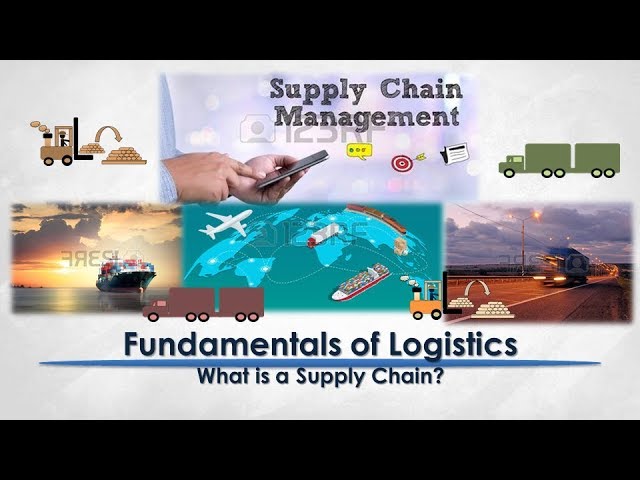
The fundamentals of logistics and supply chain management involve the planning, coordination, and execution of activities that bring products from the point of origin to the point of consumption. This includes transportation, warehousing, inventory management, and supply chain visibility. Effective logistics and supply chain management is critical to ensuring that products are delivered to customers in a timely and cost-effective manner.
Logistics and Supply Chain Management Principles
Logistics and supply chain management principles are based on the idea of creating a competitive advantage by optimizing the flow of goods, services, and information. This involves analyzing the entire supply chain, from sourcing to delivery, and identifying areas for improvement. Some key principles of logistics and supply chain management include:
- Integration: The ability to coordinate and manage all aspects of the supply chain, including transportation, warehousing, and inventory management.
- Agility: The ability to respond quickly to changes in the market or supply chain disruptions.
- Collaboration: The ability to work with suppliers, manufacturers, and other stakeholders to create a seamless and efficient supply chain.
Supply Chain Components
The supply chain is made up of several key components, including suppliers, manufacturers, distributors, and customers. Each of these components plays a critical role in the supply chain, and effective communication and coordination are essential to ensuring that products are delivered to customers in a timely and cost-effective manner. Some key supply chain components include:
- Supply chain planning: The process of analyzing and planning the supply chain to ensure that it is optimized for efficiency and effectiveness.
- Supply chain execution: The process of coordinating and managing the flow of goods, services, and information through the supply chain.
- Supply chain visibility: The ability to track and monitor the movement of goods, services, and information through the supply chain.
Logistics and Supply Chain Management Strategies
Logistics and supply chain management strategies are designed to optimize the flow of goods, services, and information through the supply chain. This involves analyzing the supply chain and identifying areas for improvement, as well as implementing strategic initiatives to improve efficiency and effectiveness. Some key logistics and supply chain management strategies include:
- Just-in-time inventory management: The strategy of maintaining low inventory levels and ordering products just in time to meet customer demand.
- Lean logistics: The strategy of eliminating waste and inefficiency in the supply chain to improve efficiency and reduce costs.
- Global sourcing: The strategy of sourcing products from global suppliers to reduce costs and improve efficiency.
What is the most fundamental part of logistics management?
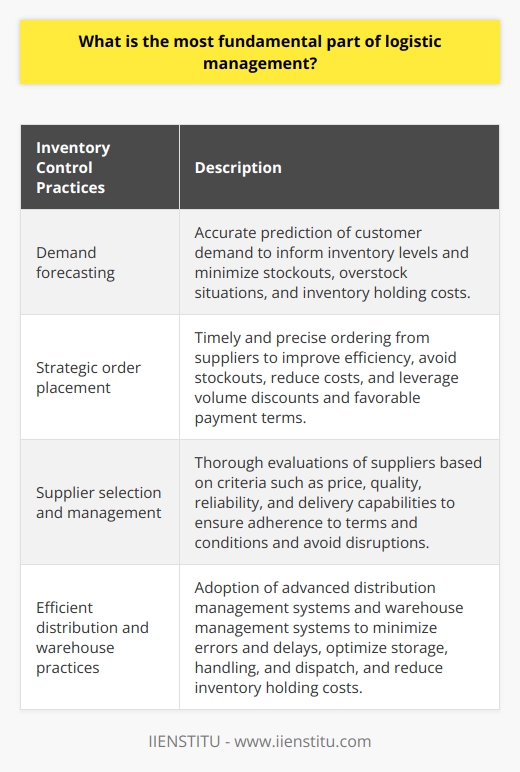
The most fundamental part of logistics management is supply chain management, which involves the coordination and management of all activities, resources, and partners involved in the production and delivery of products or services. This includes procurement, manufacturing, transportation, warehousing, and distribution. Effective logistics management is critical to the success of any business, as it enables companies to deliver products to customers quickly, efficiently, and at a low cost.
Key Components of Logistics Management
The key components of logistics management include planning, execution, and monitoring. These components work together to ensure that products are delivered to customers on time and in good condition. Some of the key activities involved in logistics management include:
- Demand forecasting, which involves predicting customer demand for products
- Inventory management, which involves managing the flow of goods and materials
- Transportation management, which involves coordinating the movement of goods and materials
Benefits of Effective Logistics Management
Effective logistics management can bring numerous benefits to businesses, including cost savings, improved customer satisfaction, and increased competitiveness. By streamlining logistics operations and reducing waste, companies can reduce their costs and improve their bottom line. Some of the ways that companies can benefit from effective logistics management include:
- Reduced lead times, which can enable companies to respond quickly to changing customer demand
- Improved inventory turnover, which can reduce inventory costs and improve cash flow
- Enhanced supply chain visibility, which can enable companies to track and manage their supply chains more effectively
Challenges in Logistics Management
Despite its importance, logistics management can be a complex and challenging task, particularly in today's globalized and fast-paced business environment. Some of the challenges that companies may face in managing their logistics operations include increased complexity, higher customer expectations, and greater risk. To overcome these challenges, companies may need to:
- Invest in logistics technology, such as transportation management systems and warehouse management systems
- Develop strategic partnerships with logistics providers and other supply chain partners
- Improve supply chain visibility and risk management to minimize the impact of disruptions and other risks
More information
What is the significance of Supply Chain Management in modern business?
Supply Chain Management (SCM) is fundamental to the success of modern businesses, as it enables companies to coordinate and optimize the flow of goods, services, and information from raw materials to end customers. Effective SCM involves strategic planning, risk management, and collaboration with suppliers, manufacturers, logistics providers, and other stakeholders to ensure that products are delivered on time, in the right quantities, and at the lowest possible cost. By streamlining supply chain operations, businesses can improve efficiency, reduce costs, and enhance customer satisfaction, ultimately leading to increased competitiveness and revenue growth.
How does a Master's degree in Supply Chain Management prepare students for leadership roles in logistics?
A Master's degree in Supply Chain Management provides students with advanced knowledge and skills in logistics, operations management, and supply chain strategy, preparing them for leadership roles in logistics and related fields. Through specialized coursework, case studies, and practical experiences, students develop a deep understanding of supply chain dynamics, global trade, and regulatory compliance, as well as analytical and problem-solving skills to design, implement, and manage effective supply chain systems. With a Master's degree in SCM, graduates are equipped to lead cross-functional teams, drive innovation, and make strategic decisions that drive business success.
What are the key challenges and opportunities in Supply Chain Management, and how can a Master's degree help address them?
The complexity and uncertainty of global supply chains present numerous challenges, including disruptions, risks, and sustainability concerns, which can be mitigated with the help of a Master's degree in Supply Chain Management. By developing expertise in supply chain resilience, risk management, and sustainable practices, graduates can identify opportunities for improvement and innovation, such as adopting digital technologies, implementing circular economy principles, and fostering collaborative relationships with suppliers and stakeholders. With a Master's degree in SCM, professionals can stay ahead of the curve, drive business growth, and contribute to a more sustainable and resilient supply chain ecosystem.
How can a Master's degree in Supply Chain Management enhance career prospects and professional development in logistics?
A Master's degree in Supply Chain Management can significantly enhance career prospects and professional development in logistics, as it demonstrates expertise and commitment to the field. With a Master's degree in SCM, graduates can pursue leadership roles, such as supply chain director, logistics manager, or operations executive, and command higher salaries and greater respect in the industry. Moreover, the advanced knowledge and skills acquired through a Master's program can open doors to new career opportunities, such as consulting, teaching, or research, and facilitate professional certifications, such as the Certified Supply Chain Professional (CSCP) or Certified Professional in Supply Management (CPSM), further validating expertise and advancing career goals.