
Lean Management: A Master's for Continuous Improvement and Operational Excellence

Lean Management is a philosophy focused on continuous improvement and operational excellence. It aims to maximize value for customers while minimizing waste and optimizing processes. By adopting Lean principles, organizations can streamline their operations, enhance productivity, and improve overall performance. This approach has been successfully implemented in various industries, from manufacturing to healthcare, and has become a key strategy for achieving sustainable competitiveness. A Master's in Lean Management can equip professionals with the skills and knowledge needed to drive transformation and lead their organizations towards operational excellence. Effective implementation requires a deep understanding of Lean principles and practices.

Understanding Lean Management: A Key to Continuous Improvement and Operational Excellence
Lean Management is a philosophy and set of principles that aims to minimize waste and maximize value for customers while optimizing processes and workflows. It involves a continuous effort to improve and refine processes, eliminating non-value-added activities and focusing on efficiency and effectiveness. The core idea of Lean Management is to create more value for customers with fewer resources, which is achieved through a cultural transformation that engages all employees in the improvement process.
Introduction to Lean Principles
Lean principles are based on the idea of delivering more value to customers by minimizing waste and maximizing flow. The key principles include defining value, mapping the value stream, creating a future state value stream, and continuously improving. These principles are designed to help organizations identify and eliminate waste, optimize processes, and improve overall productivity. By applying Lean principles, organizations can reduce costs, improve quality, and increase customer satisfaction.
Benefits of Implementing Lean Management
Implementing Lean Management can bring numerous benefits to an organization, including reduced lead times, improved quality, and increased customer satisfaction. It also helps to reduce costs by eliminating waste and optimizing resources. Additionally, Lean Management fosters a culture of continuous improvement, which encourages employees to identify areas for improvement and develop solutions. This leads to increased employee engagement and motivation, as well as improved communication and collaboration across departments.
Tools and Techniques for Lean Implementation
There are various tools and techniques used in Lean implementation, including value stream mapping, root cause analysis, and Kaizen events. Value stream mapping is a visual representation of the flow of materials and information across the value stream, helping to identify areas of waste and opportunities for improvement. Root cause analysis is a method used to identify the underlying causes of problems, while Kaizen events are workshops that bring together employees to identify and solve problems. These tools and techniques help organizations to identify and address inefficiencies and improve overall performance.
Challenges and Barriers to Lean Implementation
Despite the benefits of Lean Management, there are several challenges and barriers to implementation, including resistance to change, lack of leadership commitment, and insufficient training. Organizations may also face challenges in changing their culture and mindset, as well as in measuring and sustaining improvements. Additionally, Lean implementation requires significant investment in training and development, which can be a barrier for some organizations. To overcome these challenges, organizations need to develop a clear strategy and roadmap for Lean implementation, and ensure that all employees are engaged and committed to the process.
Best Practices for Sustaining Lean Improvements
To sustain Lean improvements, organizations need to develop a culture of continuous improvement, where employees are empowered to identify and solve problems. This requires leadership commitment, employee engagement, and ongoing training. Organizations should also establish metrics and benchmarking to measure and track improvements, as well as recognize and reward employees for their contributions to Lean improvements. The following table summarizes some key best practices for sustaining Lean improvements:
| Best Practice | Description |
|---|---|
| Develop a culture of continuous improvement | Encourage employees to identify and solve problems |
| Establish metrics and benchmarking | Measure and track improvements |
| Provide ongoing training and development | Ensure employees have the skills and knowledge needed to sustain improvements |
| Recognize and reward employees | Encourage employee engagement and motivation |
| Ensure leadership commitment | Leaders must be committed to the Lean process and provide support and resources |
By following these best practices, organizations can sustain Lean improvements and achieve long-term success.
What is lean management continuous improvement?

Lean management continuous improvement is a philosophy that aims to eliminate waste and maximize value for customers while minimizing waste and optimizing processes. It is a long-term approach that involves ongoing efforts to improve processes, products, and services. The core idea of lean management is to create a culture of continuous learning and improvement, where employees are empowered to identify areas for improvement and implement changes.
Key Principles of Lean Management
The key principles of lean management include focus on customer value, elimination of waste, continuous improvement, and respect for people. Some of the key elements of lean management continuous improvement include:
- Identifying waste: identifying areas where waste can be eliminated, such as overproduction, waiting, transportation, inventory, motion, overprocessing, and defects.
- Streamlining processes: streamlining processes to reduce lead time, increase efficiency, and improve quality.
- Empowering employees: empowering employees to take ownership of their work and to identify areas for improvement.
Benefits of Lean Management Continuous Improvement
The benefits of lean management continuous improvement include increased efficiency, improved quality, reduced costs, and increased customer satisfaction. Some of the benefits of lean management continuous improvement include:
- Improved productivity: improving productivity by eliminating waste and streamlining processes.
- Enhanced customer satisfaction: enhancing customer satisfaction by providing high-quality products and services.
- Reduced costs: reducing costs by eliminating waste and optimizing processes.
Tools and Techniques for Lean Management Continuous Improvement
Some of the tools and techniques used in lean management continuous improvement include value stream mapping, root cause analysis, Pareto analysis, and kaizen events. Some of the tools and techniques used in lean management continuous improvement include:
- Value stream mapping: creating a visual representation of the value stream to identify areas for improvement.
- Root cause analysis: identifying the root cause of problems to develop effective solutions.
- Pareto analysis: using the Pareto principle to identify the most common problems and develop solutions.
What is Lean in operational excellence?

Lean in operational excellence refers to a philosophy and set of principles that aim to minimize waste and maximize value for customers while optimizing processes and systems. It is centered around the idea of continuous improvement and customer satisfaction, and involves the elimination of non-value-added activities to achieve operational efficiency. Lean operational excellence is achieved through a combination of strategic planning, process optimization, and performance measurement, which enables organizations to respond quickly to changing market conditions and customer needs.
Key Principles of Lean Operational Excellence
The key principles of Lean operational excellence include focus on customer value, elimination of waste, and continuous improvement. Some of the key elements of Lean operational excellence are:
- Value stream mapping: a visual representation of the process to identify areas of waste and opportunities for improvement
- Root cause analysis: a method to identify the underlying causes of problems and develop effective solutions
- Performance metrics: a set of measures to track progress and identify areas for improvement, such as lead time, cycle time, and throughput
Benefits of Implementing Lean Operational Excellence
Implementing Lean operational excellence can bring numerous benefits to an organization, including increased efficiency, improved quality, and reduced costs. Some of the benefits of Lean operational excellence are:
- Improved customer satisfaction: through the delivery of high-quality products and services that meet customer needs and expectations
- Increased productivity: through the elimination of waste and optimization of processes, resulting in reduced lead times and improved throughput
- Enhanced competitiveness: through the development of a culture of continuous improvement, enabling organizations to respond quickly to changing market conditions and customer needs
Challenges and Limitations of Lean Operational Excellence
Despite the benefits of Lean operational excellence, there are several challenges and limitations that organizations may face when implementing this philosophy. Some of the challenges and limitations include:
- Resistance to change: from employees who may be accustomed to traditional ways of working and may be resistant to new ideas and approaches
- Lack of leadership commitment: without strong leadership support, Lean initiatives may struggle to gain traction and achieve lasting results
- Insufficient training and resources: without adequate training and resources, employees may not have the necessary skills and knowledge to implement Lean principles effectively
What are the 5 rules of lean management?
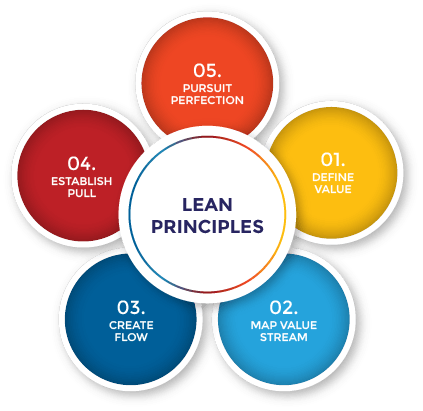
The 5 rules of lean management are designed to help organizations improve efficiency, reduce waste, and increase customer value. These rules are:
1. Value: Define value from the customer's perspective and focus on creating value for them.
2. Value Stream: Identify and map out the value stream to understand the flow of processes and eliminate waste.
3. Flow: Create a smooth flow of processes to ensure that work is being done efficiently and effectively.
4. Pull: Only produce what is needed, when it is needed, using a pull system to reduce inventory and waste.
5. Perfection: Strive for perfection by continuously improving and refining processes.
Understanding the Principles of Lean Management
The principles of lean management are centered around creating value for customers while minimizing waste. This is achieved by focusing on the value stream and eliminating non-value-added activities. Some key principles of lean management include:
- Focus on the customer: Understand the customer's needs and prioritize creating value for them.
- Eliminate waste: Identify and eliminate waste in all its forms, including inventory, motion, and defects.
- Continuously improve: Encourage a culture of continuous improvement and empower employees to identify and solve problems.
Implementing Lean Management in Practice
Implementing lean management in practice requires a cultural shift and a commitment to continuous improvement. This can be achieved by:
- Mapping the value stream: Identify and map out the value stream to understand the flow of processes and eliminate waste.
- Implementing lean tools: Use lean tools such as kanban and total productive maintenance to improve efficiency and reduce waste.
- Empowering employees: Empower employees to identify and solve problems, and provide them with the training and resources they need to improve processes.
Benefits of Lean Management
The benefits of lean management are numerous and include:
- Increased efficiency: Lean management helps to eliminate waste and improve efficiency, resulting in cost savings and increased productivity.
- Improved quality: By focusing on continuous improvement and perfection, organizations can improve the quality of their products and services.
- Enhanced customer satisfaction: Lean management helps organizations to create value for customers and respond quickly to their needs, resulting in increased customer satisfaction.
What are the 5 P's of Lean?

The 5 P's of Lean are a set of principles that aim to improve the efficiency and effectiveness of a process or system by eliminating waste and maximizing value. These principles are: Purpose, Process, People, Partners, and Performance. Implementing the 5 P's of Lean can help organizations achieve their goals and improve their overall productivity.
Understanding the 5 P's of Lean
The 5 P's of Lean are a framework for achieving excellence in any field. To understand the 5 P's, it's essential to break down each principle and its role in the Lean philosophy. The following list highlights the key aspects of each P:
- Purpose: Defining the organization's mission and vision to ensure everyone is working towards the same goal.
- Process: Streamlining and optimizing workflows to eliminate inefficiencies and reduce waste.
- People: Empowering employees to take ownership of their work and make data-driven decisions to improve the process.
Implementing the 5 P's of Lean
Implementing the 5 P's of Lean requires a cultural shift within an organization. It involves creating a culture of continuous improvement and collaboration. The following list outlines the key steps to implement the 5 P's:
- Establish a clear purpose and communicate it to all employees to ensure everyone is working towards the same goal.
- Map and optimize processes to eliminate bottlenecks and reduce lead time.
- Develop people by providing training and coaching to enhance their skills and knowledge.
Sustaining the 5 P's of Lean
Sustaining the 5 P's of Lean requires ongoing effort and commitment from all employees. It involves regularly reviewing and assessing the process to identify areas for improvement. The following list highlights the key aspects of sustaining the 5 P's:
- Regularly review performance metrics to identify areas for improvement and make data-driven decisions.
- Continuously monitor and evaluate the process to identify inefficiencies and eliminate waste.
- Encourage partnerships and collaboration with other departments and stakeholders to drive innovation and growth.
More information
What is Lean Management and its Importance in Business?
Lean Management is a philosophy that aims to minimize waste and maximize value for customers. It is a management approach that focuses on continuous improvement and operational excellence. The core idea of Lean Management is to identify and eliminate non-value-added activities that do not contribute to the overall value of a product or service. By implementing Lean Management, businesses can improve efficiency, reduce costs, and enhance customer satisfaction. This approach is not limited to manufacturing sectors, but can be applied to any industry or organization. The key to successful Lean Management is to foster a culture of continuous learning and improvement, where employees are empowered to identify problems and develop solutions.
How Does Lean Management Contribute to Operational Excellence?
Lean Management plays a crucial role in achieving operational excellence by focusing on process improvement and waste reduction. By identifying and eliminating inefficiencies, businesses can improve productivity, reduce lead times, and enhance quality. Lean Management also emphasizes the importance of standardization and visual management, which helps to reduce variation and improve predictability. Additionally, Lean Management encourages employee engagement and empowerment, which leads to increased motivation and job satisfaction. By adopting Lean Management principles, businesses can achieve sustainable and long-term improvements, leading to operational excellence. The tools and techniques of Lean Management, such as value stream mapping and root cause analysis, provide a structured approach to identifying and solving problems.
What are the Key Principles of Lean Management?
The key principles of Lean Management include value, value stream, flow, pull, and perfection. The value principle focuses on defining value from the customer's perspective and creating value-added activities. The value stream principle involves identifying and mapping the value stream to eliminate waste and improve flow. The flow principle aims to create a smooth and continuous flow of products or services. The pull principle involves producing products or services based on customer demand, rather than forecasting. The perfection principle emphasizes the importance of continuous improvement and striving for perfection. By applying these principles, businesses can create a lean culture that is focused on customer satisfaction, quality, and efficiency. The key to successful Lean Management is to apply these principles in a practical and sustainable way.
How Can Organizations Implement Lean Management Successfully?
Implementing Lean Management successfully requires a structured approach and a commitment to continuous improvement. Organizations should start by defining their vision and goals, and then identify areas for improvement. They should also develop a plan for implementing Lean Management, which includes training and educating employees, identifying and eliminating waste, and improving processes. Additionally, organizations should establish metrics to measure progress and performance, and recognize and reward employees for their contributions to Lean Management. It is also important to sustain the momentum of Lean Management by continuously monitoring and improving processes, and addressing obstacles and challenges. By following these steps, organizations can successfully implement Lean Management and achieve operational excellence. The support of leadership and the engagement of employees are also critical to the successful implementation of Lean Management.
Leave a Reply